
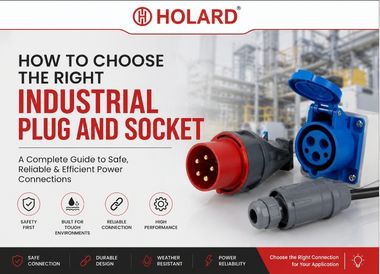
Industrial electrical systems require dependable power connections that can perform safely under demanding working conditions. Unlike household electrical connectors, industrial plugs and sockets are specifically engineered to handle high electrical loads, harsh environments, and continuous operation. Whether you manage a manufacturing plant, construction site, warehouse, food processing unit, or commercial facility, selecting the right Industrial Plug and Socket plays a significant role in ensuring safety, productivity, and equipment reliability.
A poor electrical connection can lead to equipment failure, unexpected downtime, higher maintenance costs, and workplace safety risks. On the other hand, a high-quality industrial plug and socket provides a secure electrical connection that supports efficient operations while protecting workers and valuable machinery.
Modern industries rely on electrical equipment more than ever before. As automation, heavy-duty machinery, and smart manufacturing continue to grow, the demand for reliable industrial electrical accessories also increases. Therefore, choosing the correct industrial plug and socket is no longer just a purchasing decision. It is an investment in operational efficiency and long-term business success.
This comprehensive guide explains everything you need to know before selecting an industrial plug and socket. You will learn how these connectors work, why they matter, the available types, their major components, and the important factors to consider before making your final decision.
What Is an Industrial Plug and Socket and Why Is It Important
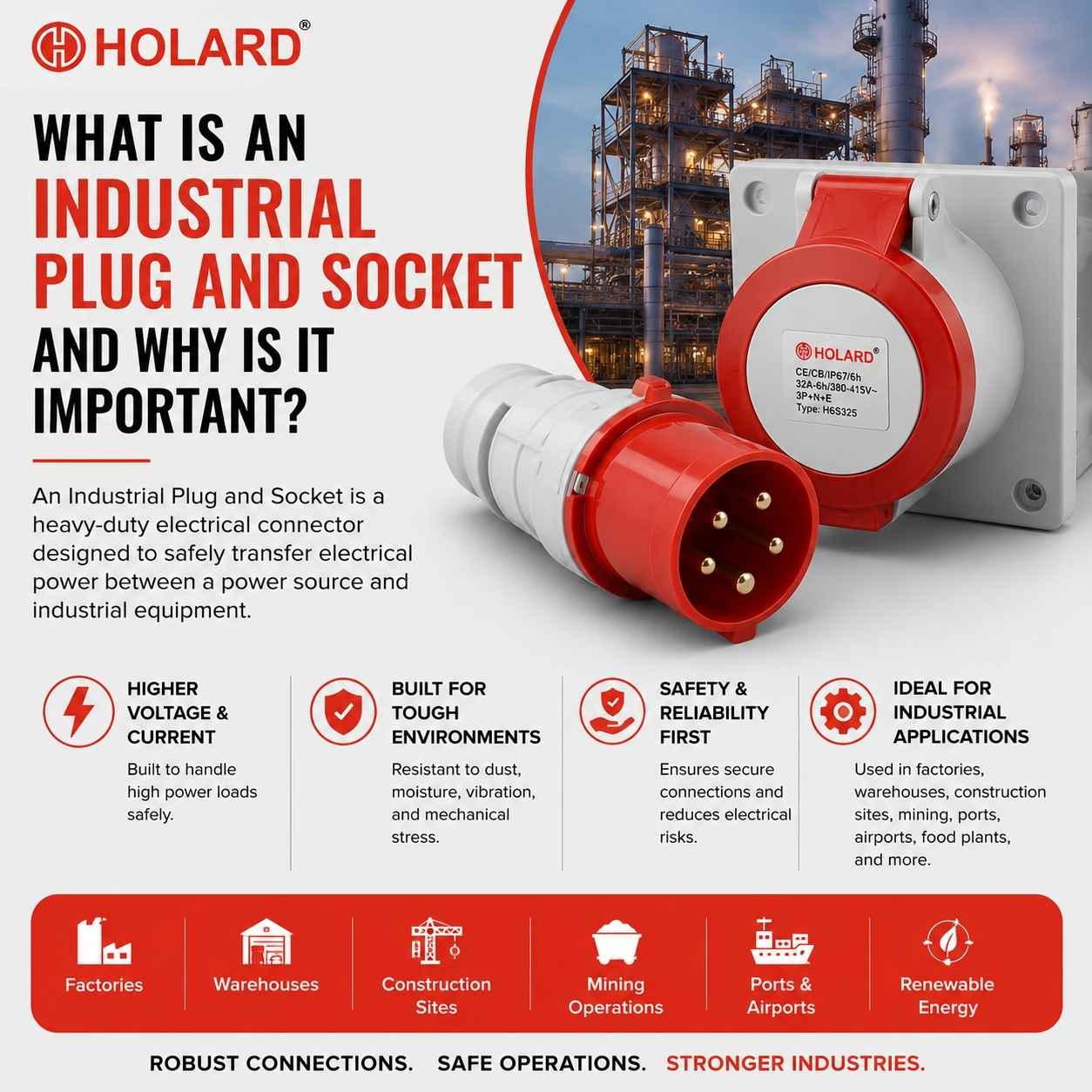
An Industrial Plug and Socket is a heavy-duty electrical connector designed to safely transfer electrical power between a power source and industrial equipment. Unlike ordinary household plugs, industrial connectors are manufactured to withstand higher voltage, higher current, mechanical stress, dust, moisture, vibration, and continuous operation.
These connectors are widely used in factories, warehouses, construction sites, mining operations, ports, airports, food processing plants, commercial buildings, and renewable energy projects. Their robust construction makes them suitable for environments where safety and reliability are essential.
Why Industrial Plug and Socket Systems Matter
Industrial facilities depend on uninterrupted electrical power every day. Even a few minutes of downtime can interrupt production schedules, delay deliveries, and increase operating costs.
An industrial plug and socket helps businesses maintain stable electrical connections by providing:
- Reliable power transmission
- Secure electrical connections
- Better equipment protection
- Reduced maintenance
- Improved worker safety
- Long service life
Unlike domestic electrical connectors, industrial connectors are designed for repeated use under challenging conditions. They continue delivering reliable performance even when exposed to vibration, dust, moisture, and frequent cable movement.
How Does an Industrial Plug and Socket Work
Every industrial plug and socket consists of two main components.
The plug connects to the electrical cable, while the socket receives the plug and transfers electrical power to the connected equipment.
Inside the connector, specially designed contacts create a secure electrical connection. Most industrial models also include grounding contacts and locking mechanisms that improve safety while preventing accidental disconnection.
Once connected, electricity flows safely through the contact points to the industrial machine or equipment.
Because the connection remains stable, machines operate efficiently with minimal interruption.
Types of Industrial Plug and Socket
Selecting the correct connector depends on several factors, including voltage, current rating, operating environment, and equipment requirements.
Understanding the available types makes the buying process much easier.
1. Single Phase Industrial Plug and Socket
Single-phase connectors are commonly used for light and medium-duty industrial equipment.
Typical applications include:
- Portable electrical tools
- Workshop equipment
- Commercial appliances
- Maintenance machines
- Small compressors
These connectors are compact, reliable, and easy to install.
2. Three Phase Industrial Plug and Socket
Three-phase industrial connectors deliver greater electrical power for demanding industrial applications.
They are widely used for:
- Industrial motors
- Manufacturing machines
- CNC equipment
- Heavy compressors
- Production lines
- Material handling systems
Because three-phase power provides higher efficiency, many industrial facilities rely on these connectors for continuous production.
3. Waterproof Industrial Plug and Socket
Outdoor electrical installations often face rain, humidity, and water exposure.
Waterproof industrial connectors include protective sealing that prevents water from entering the electrical contacts.
These products are ideal for:
- Construction sites
- Marine applications
- Agricultural equipment
- Outdoor manufacturing
- Mining operations
They continue operating safely even in difficult weather conditions.
4. Weather Resistant Industrial Plug and Socket
Some industrial environments expose electrical equipment to dust, sunlight, chemicals, and extreme temperatures.
Weather-resistant industrial connectors provide additional protection against environmental damage while maintaining dependable performance throughout the year.
5. High Current Industrial Plug and Socket
Heavy industrial machinery requires connectors capable of handling large electrical loads safely.
High-current industrial connectors are commonly installed in:
- Large manufacturing facilities
- Heavy processing plants
- Generator systems
- Industrial power distribution
- Steel plants
These connectors reduce overheating while supporting continuous electrical demand.
Main Components of an Industrial Plug and Socket
Understanding the internal components helps buyers compare products more effectively.
1. Heavy Duty Housing
The outer housing protects the connector from impact, dust, moisture, and chemicals.
Manufacturers usually use engineering-grade thermoplastics because they offer excellent mechanical strength while resisting corrosion and weather damage.
A durable housing significantly extends product life.
2. Electrical Contacts
Electrical contacts transfer electrical current between the plug and socket.
Premium industrial connectors use highly conductive materials that reduce electrical resistance while improving efficiency.
High-quality contacts also minimize heat generation during long operating hours.
3. Grounding Pin
Safety remains one of the most important advantages of industrial connectors.
The grounding pin connects before the live contacts, providing additional protection against electrical faults and reducing the possibility of electric shock.
4. Locking Mechanism
Many industrial plug and socket systems include mechanical locking devices.
These locking systems prevent accidental unplugging caused by:
- Machine vibration
- Cable tension
- Equipment movement
- Operator handling
A secure connection helps maintain uninterrupted power while improving workplace safety.
5. Cable Gland
The cable gland seals the cable entry point and protects internal electrical parts from dust and moisture.
It also reduces cable strain, improving durability during daily industrial operation.
Key Features That Make Industrial Plug and Socket Reliable
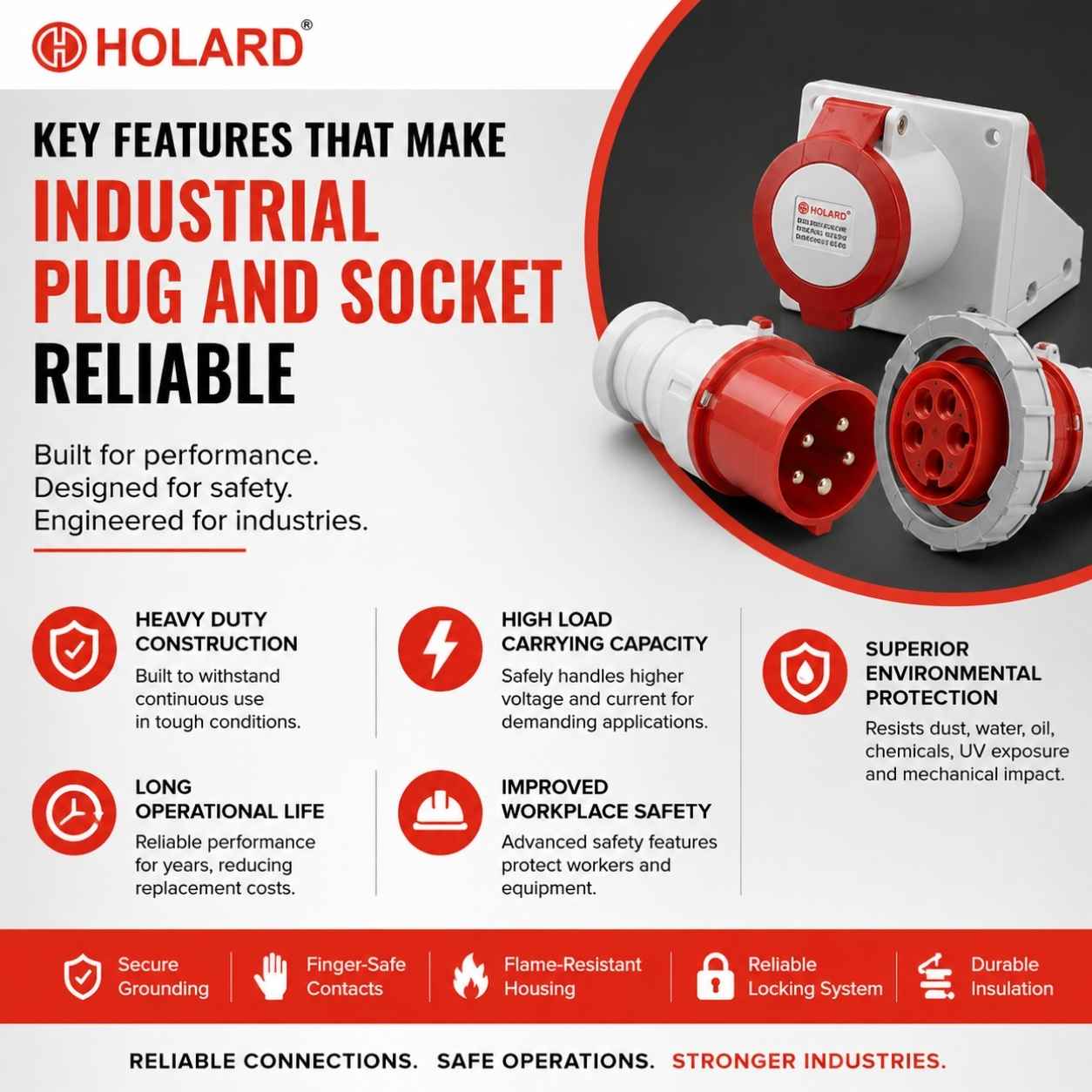
Industrial connectors differ from standard electrical plugs because they include advanced safety and durability features.
Heavy Duty Construction
Industrial environments demand equipment that performs reliably every day.
Heavy-duty construction allows industrial connectors to withstand continuous use without compromising electrical performance.
High Load Carrying Capacity
Industrial connectors safely handle higher voltage and current ratings compared to domestic electrical plugs.
This capability supports demanding industrial applications without excessive heat generation.
Superior Environmental Protection
Many industrial connectors resist:
- Dust
- Water
- Oil
- Chemicals
- UV exposure
- Mechanical impact
This protection improves reliability in both indoor and outdoor installations.
Long Operational Life
High-quality industrial connectors remain dependable for years with proper installation and routine maintenance.
Their long service life reduces replacement costs while increasing operational efficiency.
Improved Workplace Safety
Modern industrial plug and socket systems include multiple safety features that help protect workers and equipment.
These include:
- Secure grounding
- Finger-safe contacts
- Flame-resistant housing
- Reliable locking systems
- Durable insulation
Together, these features reduce electrical hazards while supporting a safer industrial workplace.
Why Choosing the Right Industrial Plug and Socket Matters
Choosing the wrong electrical connector may result in equipment damage, production delays, and increased maintenance costs.
Selecting the correct industrial plug and socket helps businesses:
- Improve electrical safety
- Increase equipment reliability
- Reduce downtime
- Lower maintenance expenses
- Improve energy efficiency
- Extend equipment lifespan
Instead of selecting a connector based only on price, evaluate build quality, electrical ratings, environmental protection, compatibility, and safety certifications.
A well-informed purchasing decision delivers better long-term value while supporting reliable industrial operations.
Industrial Plug and Socket Applications Across Industries
An Industrial Plug and Socket is one of the most widely used electrical connection solutions across different industries. Every industrial sector depends on safe and reliable power to operate machinery efficiently. Therefore, selecting the right connector improves productivity while reducing operational risks.
Manufacturing Industry
Manufacturing plants operate heavy machinery throughout the day. Production lines, robotic systems, CNC machines, and industrial motors require stable electrical connections to maintain continuous operation.
Industrial plug and socket systems help manufacturers reduce unexpected downtime while ensuring reliable power distribution across the facility.
Construction Sites
Construction projects require portable electrical equipment that frequently moves from one location to another.
Industrial connectors safely power:
- Welding machines
- Concrete mixers
- Portable lighting
- Air compressors
- Power tools
- Temporary electrical panels
Because these connectors are built for harsh environments, they continue performing even in dusty and wet conditions.
Warehouses and Distribution Centers
Modern warehouses use automation to improve efficiency. Conveyor systems, loading equipment, battery charging stations, and material handling machines all depend on reliable electrical connections.
Industrial plug and socket solutions support uninterrupted warehouse operations.
Food and Beverage Industry
Food processing facilities require electrical equipment that operates safely in environments exposed to water and regular cleaning.
Industrial connectors with suitable environmental protection provide dependable performance while supporting hygiene requirements.
Renewable Energy Projects
Solar power plants and wind farms rely on industrial electrical connectors for installation, maintenance, and power distribution.
Reliable connectors improve system performance while reducing maintenance costs over the long term.
Benefits of Choosing the Right Industrial Plug and Socket
Selecting the correct connector provides advantages that extend far beyond electrical connectivity.
Better Workplace Safety
Electrical safety remains a top priority in every industrial environment.
A quality industrial plug and socket includes secure locking systems, insulated contacts, and reliable grounding that help reduce electrical hazards.
As a result, employees can work with greater confidence around electrical equipment.
Reliable Power Distribution
Stable electrical connections improve equipment performance.
Reliable power reduces voltage fluctuations, minimizes interruptions, and supports continuous production.
Lower Maintenance Costs
High-quality industrial connectors resist wear, corrosion, dust, moisture, and mechanical damage.
Consequently, businesses spend less on repairs and replacements.
Increased Equipment Life
Electrical equipment performs better when it receives stable power.
Proper connectors reduce unnecessary electrical stress and help extend the service life of valuable industrial machinery.
Improved Business Productivity
Every minute of downtime affects production schedules and operating costs.
Reliable industrial plug and socket systems help maintain continuous workflow, allowing businesses to improve efficiency and customer satisfaction.
Industrial Plug and Socket Selection Guide
| Selection Factor | What to Check | Why It Matters |
|---|---|---|
| Voltage Rating | Match your equipment voltage | Prevents electrical faults and equipment damage |
| Current Rating | Choose the correct amperage | Ensures safe and reliable power delivery |
| Number of Pins | Select the required pin configuration | Provides proper electrical compatibility |
| IP Rating | Check dust and water protection | Improves performance in harsh environments |
| Operating Environment | Indoor or outdoor installation | Increases durability and product life |
| Safety Features | Grounding and locking mechanism | Enhances workplace safety |
| Material Quality | Heavy-duty housing and contacts | Resists wear, corrosion, and impact |
| Industry Application | Match the connector to the equipment | Improves efficiency and long-term reliability |
How to Choose the Right Industrial Plug and Socket
Choosing the correct industrial connector requires careful planning.
Instead of focusing only on price, evaluate the complete application.
Understand Your Voltage Requirements
Every industrial machine operates within a specific voltage range.
Always verify the required voltage before purchasing an industrial plug and socket.
Using an incorrect voltage rating may damage equipment and create unnecessary safety risks.
Check the Current Rating
Current rating determines how much electrical load a connector can safely carry.
Select a connector that matches or exceeds the equipment’s electrical requirements.
Avoid overloading connectors because excessive current generates heat and shortens product life.
Consider the Installation Environment
Environmental conditions influence connector performance.
Evaluate:
- Indoor or outdoor installation
- Dust exposure
- Moisture levels
- Chemical exposure
- Ambient temperature
- Mechanical vibration
Selecting a connector designed for these conditions improves durability.
Choose the Correct IP Rating
IP ratings indicate protection against dust and water.
Higher IP ratings are recommended for outdoor installations or demanding industrial environments where moisture and contaminants are present.
Verify Product Quality
Before purchasing, inspect:
- Housing material
- Contact quality
- Locking mechanism
- Cable gland
- Grounding system
- Safety certification
Quality products provide greater reliability over many years of operation.
Buy from a Trusted Manufacturer
An experienced manufacturer focuses on quality control, product testing, and international standards.
Choosing a trusted supplier helps ensure dependable performance and long-term customer satisfaction.
Common Mistakes to Avoid
Many buyers unknowingly select electrical connectors that fail to meet their application requirements.
Avoid these common mistakes.
Choosing Based Only on Price
Low-cost products may reduce initial expenses but often require frequent replacement.
Instead, evaluate product quality, durability, and overall value.
Ignoring Environmental Conditions
Outdoor applications require connectors with appropriate environmental protection.
Using indoor connectors outside may reduce performance and create safety concerns.
Using Incorrect Electrical Ratings
Always confirm voltage and current ratings before installation.
Incorrect specifications may cause equipment damage or electrical failure.
Skipping Preventive Maintenance
Even premium connectors benefit from regular inspection.
Routine maintenance identifies worn contacts, damaged housings, and loose cable connections before they become major problems.
Maintenance Tips for Long Lasting Performance
Regular maintenance helps maximize the performance and lifespan of every industrial plug and socket.
Follow these simple practices.
Inspect Connectors Regularly
Check for:
- Cracks
- Burn marks
- Loose contacts
- Corrosion
- Damaged insulation
- Worn locking mechanisms
Early inspection helps prevent costly repairs.
Keep Connectors Clean
Dust and moisture reduce electrical performance.
Clean connectors regularly using appropriate cleaning methods and ensure they remain dry before reconnecting equipment.
Replace Damaged Parts Immediately
Never continue operating damaged electrical connectors.
Replacing worn components protects both employees and equipment while improving workplace safety.
People Also Ask About Industrial Plug and Socket
An Industrial Plug and Socket is a heavy-duty electrical connector designed to safely supply power to industrial equipment. It is built to handle higher voltage, higher current, and harsh working environments.
Choose an Industrial Plug and Socket based on voltage, current rating, IP protection, operating environment, pin configuration, and equipment compatibility to ensure safe and reliable performance.
Industrial Plug and Socket systems are designed for heavy-duty applications with enhanced safety, durability, and higher electrical capacity, while standard plugs are intended for household use.
The most common types include single-phase, three-phase, waterproof, weather-resistant, and high-current Industrial Plug and Socket systems for different industrial applications.
The IP rating indicates the level of protection against dust and water. Choosing the correct IP rating helps improve safety and ensures reliable operation in challenging environments.
No FAQ found.
Industrial Plug and Socket systems are widely used in manufacturing, construction, warehouses, food processing, mining, marine, renewable energy, and commercial facilities.
Inspect Industrial Plug and Socket systems regularly as part of preventive maintenance. Frequent inspections help identify wear, loose connections, or damage before they affect performance.
Yes. Outdoor installations require an Industrial Plug and Socket with a suitable IP rating that protects against moisture, dust, and other environmental conditions.
A quality Industrial Plug and Socket should include grounding protection, a secure locking mechanism, durable insulation, corrosion-resistant contacts, and a robust housing for safe operation.
A high-quality Industrial Plug and Socket improves workplace safety, ensures reliable power distribution, reduces maintenance costs, minimizes downtime, and extends the lifespan of industrial equipment.
No FAQ found.
Final Thoughts on Choosing the Right Industrial Plug and Socket
Selecting the right Industrial Plug and Socket is essential for maintaining safe, efficient, and reliable industrial operations. A properly chosen connector supports uninterrupted power distribution, protects valuable equipment, and improves workplace safety.
Before purchasing, evaluate your electrical requirements, environmental conditions, equipment compatibility, and product quality. Investing in durable industrial connectors reduces maintenance costs, minimizes downtime, and increases operational efficiency.
Whether you operate a manufacturing facility, warehouse, construction site, food processing plant, or renewable energy project, choosing high-quality industrial electrical connectors is a smart long-term investment.
If you are looking for dependable industrial electrical solutions, explore Holard range of industrial plugs and sockets designed to deliver reliable performance in demanding industrial environments.
Looking for a dependable Industrial Plug and Socket for your industrial applications?
Explore Holard range of high-quality industrial electrical solutions designed for safety, durability, and long-lasting performance. Find the right connector for your business and keep your operations running efficiently.