
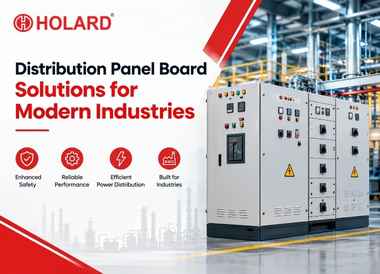
Modern industries depend on a stable electrical system to keep machines running, production lines moving, and workplaces safe. As industrial facilities become more automated, their electrical infrastructure must handle higher loads, changing power requirements, and increasingly complex equipment. A reliable Distribution Panel Board helps organizations manage these demands by controlling, protecting, and distributing electrical power across different circuits.
However, choosing a panel is not simply about selecting a box with breakers inside. Industrial environments require careful consideration of load capacity, protection devices, enclosure construction, wiring arrangements, accessibility, safety requirements, and future expansion.
For that reason, businesses should understand how distribution systems work before investing in electrical equipment. The right solution can improve power management, reduce electrical risks, simplify maintenance, and support long-term operational efficiency.
This guide explains the role of industrial distribution panels, their major components, types, applications, benefits, selection factors, installation practices, maintenance requirements, and common questions buyers ask before making a purchase.
What Is a Distribution Panel Board?
A Distribution Panel Board is an electrical enclosure that receives power from an incoming electrical supply and distributes it to multiple outgoing circuits. It usually contains protective devices such as circuit breakers, busbars, terminals, and other control components.
In simple terms, the panel acts as a central point between the incoming power source and the electrical equipment that consumes that power.
For example, a manufacturing facility may need separate circuits for:
- Production machinery
- Lighting systems
- HVAC equipment
- Motors
- Control systems
- Office equipment
- Pumps
- Emergency systems
Instead of connecting every load directly to the main supply, the panel organizes these circuits into a controlled and protected distribution system.
How Does a Distribution Panel Work?
The incoming electrical supply enters the panel through the main incomer. From there, electrical energy passes through the main protective device and reaches the busbar arrangement.
The busbars then distribute power to individual outgoing circuits. Each circuit normally has its own protective device, which helps isolate a fault without shutting down the entire electrical installation.
This arrangement provides several advantages. First, it makes circuit management easier. Second, it allows technicians to identify individual circuits quickly. Finally, it improves protection by separating loads into manageable sections.
Why Distribution Panel Boards Matter in Modern Industries
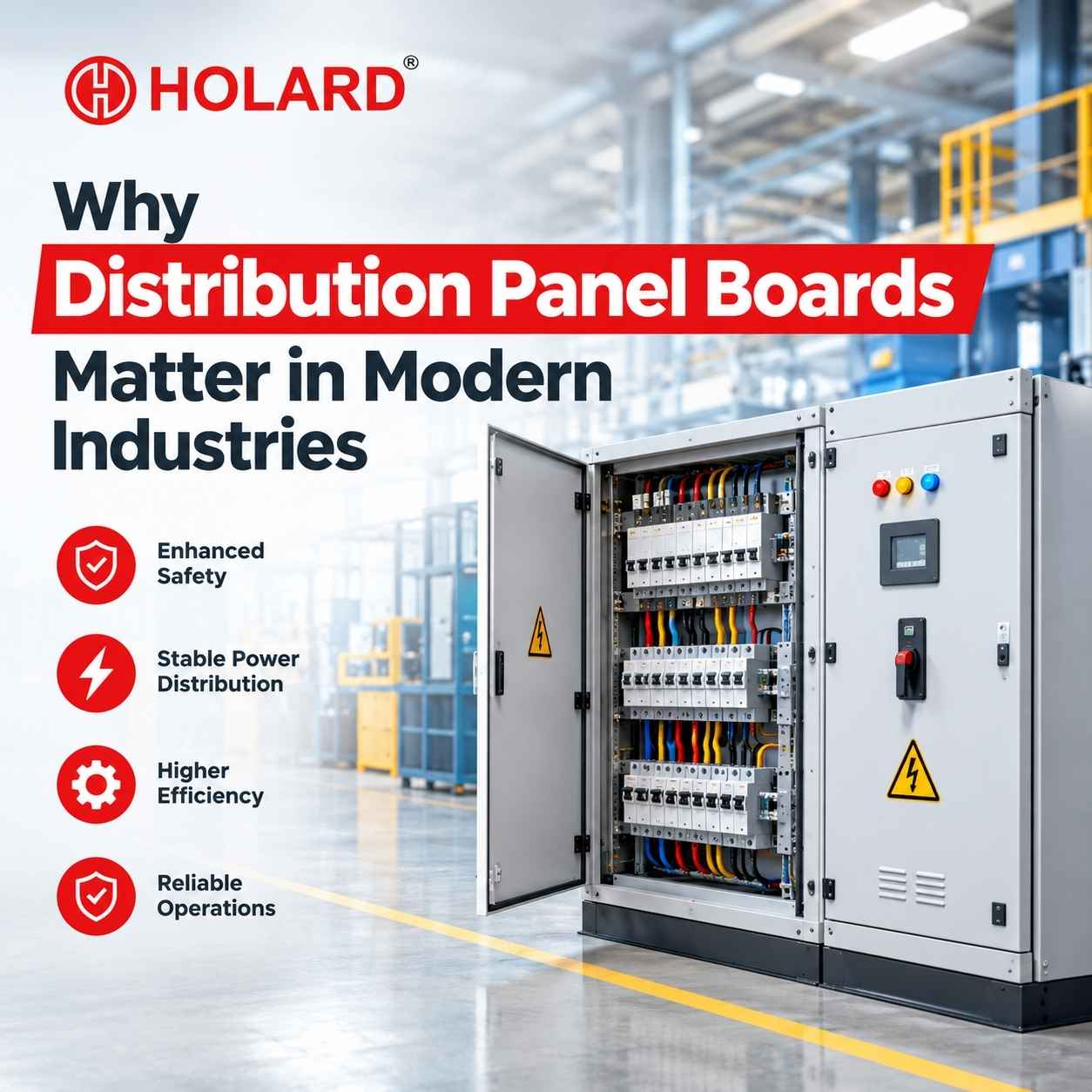
Industrial electrical systems face demanding operating conditions. Large machines can draw significant current, motors may create starting surges, and production environments can expose electrical equipment to dust, moisture, vibration, and heat.
Therefore, industries need distribution equipment that can handle these challenges consistently.
A properly selected panel provides a structured method for distributing electrical power. It also supports electrical protection and maintenance activities.
01. Centralized Power Management
A well-designed panel brings multiple circuits into one organized location. Technicians can therefore identify breakers, isolate circuits, and perform maintenance more efficiently.
02. Improved Electrical Protection
Protective devices can disconnect faulty circuits when abnormal current conditions occur. This helps reduce the risk of equipment damage and supports safer electrical operation.
03. Better Circuit Organization
Industrial facilities often contain dozens or hundreds of electrical loads. A properly labeled distribution system makes those circuits easier to identify and manage.
04. Support for Future Expansion
Production facilities frequently add machinery or upgrade existing systems. A panel with sufficient capacity and spare ways can make future expansion easier.
Key Components of a Distribution Panel Board
Understanding the main components helps buyers evaluate panel quality and suitability.
01. Main Incomer
The main incomer receives electrical power from the upstream supply. Depending on the installation, it may incorporate a main circuit breaker, switch disconnector, or another suitable protective device.
The incomer should match the expected electrical load and system requirements.
02. Busbars
Busbars distribute electrical power from the incoming supply to outgoing circuits. Manufacturers select busbar materials and dimensions according to current requirements, temperature rise, fault levels, and applicable standards.
Copper and aluminium are common conductive materials, although the exact choice depends on the design.
03. Circuit Breakers
Circuit breakers protect individual circuits against conditions such as overloads and short circuits. Different applications may require different breaker technologies and ratings.
A correct breaker selection ensures that the protective device responds appropriately to the circuit it serves.
04. Neutral and Earth Bars
Neutral and earth arrangements help maintain proper circuit connections and support electrical safety. Their configuration depends on the electrical system and installation requirements.
05. Enclosure
The enclosure protects internal electrical components from external conditions and accidental contact.
Industrial applications may require stronger construction and higher ingress protection than ordinary indoor installations.
06. Cable Termination Area
A practical termination area gives electricians enough space to connect incoming and outgoing cables safely. Good cable routing also reduces confusion during future maintenance.
Types of Distribution Panel Board Solutions
Different industrial environments require different distribution arrangements. Therefore, manufacturers offer several configurations to suit specific applications.
01. Main Distribution Panel
A main distribution panel receives electrical power from the primary source and distributes it to major sections of a facility.
These panels often serve large buildings, factories, commercial facilities, and industrial plants.
02. Sub Distribution Panel
A sub distribution panel receives power from an upstream distribution system and supplies a specific area or group of loads.
For instance, a factory may use separate panels for production, utilities, administration, and warehouse areas.
03. Motor Control Distribution Panel
Facilities with numerous motors may require specialized distribution and control arrangements. These systems can integrate suitable protective and switching devices for motor-driven loads.
04. Outdoor Distribution Panel
Outdoor installations require additional protection against environmental exposure. Depending on the location, the enclosure may need protection against rain, dust, sunlight, humidity, and corrosion.
05. Custom Industrial Panels
Some projects have unusual voltage, current, circuit, space, or control requirements. In such cases, manufacturers can develop customized panel configurations based on the project’s electrical design.
Distribution Panel Board Applications Across Industries
Industrial electrical distribution systems support a wide range of sectors.
01. Manufacturing Plants
Manufacturing facilities operate machinery, conveyors, motors, automation systems, and production equipment. Reliable electrical distribution helps these loads receive controlled and protected power.
02. Commercial Buildings
Shopping centers, offices, hotels, and large commercial properties use distribution panels to manage lighting, HVAC, elevators, pumps, and other electrical systems.
03. Warehouses and Logistics Centers
Modern warehouses use conveyors, automated storage systems, charging equipment, lighting, and material-handling machinery. A structured electrical distribution system helps organize these loads.
04. Construction Sites
Temporary electrical installations require equipment designed for demanding site conditions. Appropriate distribution solutions can support tools, temporary lighting, pumps, and construction machinery.
05. Data and Technology Facilities
Technology-focused facilities require dependable power distribution for servers, cooling systems, networking equipment, and supporting infrastructure.
06. Infrastructure and Utility Projects
Water treatment plants, pumping stations, transportation facilities, and utility installations also depend on reliable electrical distribution.
Benefits of Using a High-Quality Distribution Panel Board
A quality panel can deliver advantages that extend beyond basic power distribution.
01. Enhanced Safety
Proper circuit protection helps reduce electrical risks. Furthermore, secure enclosures and organized wiring can limit accidental contact with energized components.
02. Reliable Power Distribution
A correctly designed panel distributes electrical energy according to the facility’s load requirements. This supports stable equipment operation.
03. Easier Maintenance
Clear circuit identification and accessible components allow technicians to troubleshoot systems more efficiently.
04. Reduced Downtime
When a fault affects one protected circuit, the appropriate protective device can isolate that circuit. Consequently, other sections may continue operating, depending on the system design.
05. Better Energy Management
A well-organized distribution system makes it easier to monitor and manage electrical loads. This can support broader energy-efficiency initiatives.
06. Long-Term Scalability
Businesses rarely remain static. Production capacity can grow, new machines can arrive, and electrical demand can increase. A scalable panel design can accommodate these changes more effectively.
How to Choose the Right Distribution Panel Board
Selecting the correct panel requires more than comparing prices. Buyers should evaluate the complete electrical and environmental requirements.
01. Evaluate Voltage and Current Requirements
Start with the electrical characteristics of the installation. Consider the incoming voltage, system configuration, maximum demand, and expected load.
The panel and protective devices should match the electrical design.
02. Calculate the Connected Load
List the equipment connected to the panel and determine their expected operating requirements.
Consider motors, heaters, lighting, compressors, pumps, and other high-demand loads. Also account for diversity and future requirements where appropriate.
03.Consider Fault Levels
Short-circuit conditions can create extremely high fault currents. Therefore, the panel and protective devices must have suitable ratings for the installation’s prospective fault level.
04. Select the Correct Enclosure Protection
Environmental conditions matter.
For dusty, wet, corrosive, or outdoor locations, the enclosure should provide appropriate protection against the surrounding environment.
05. Plan for Future Expansion
Do not design the system only around today’s equipment. Consider future circuits, additional machinery, and potential production expansion.
Including suitable spare ways and capacity can reduce future modification costs.
06. Check Applicable Standards
Electrical equipment should comply with the standards and regulations relevant to its intended application and location.
Professional engineers and qualified electrical contractors should verify the applicable requirements before installation.
Installation Best Practices for Distribution Panels
Correct installation is just as important as selecting the right equipment.
01. Follow the Electrical Design
Installers should follow the approved electrical drawings and manufacturer instructions. Changes should undergo appropriate technical review.
02. Use Qualified Professionals
Industrial electrical panels involve high-energy systems. Qualified electricians and electrical engineers should handle design, installation, testing, and commissioning.
03. Maintain Proper Cable Routing
Organized cable routing makes troubleshooting easier and reduces the chance of accidental damage.
Use suitable cable management methods and maintain appropriate bending radii.
04. Tighten Connections Correctly
Loose electrical connections can create heat and reliability problems. Technicians should follow manufacturer torque requirements when terminating conductors.
05. Label Every Circuit
Clear labels help technicians identify circuits quickly. Consistent labeling also improves maintenance and troubleshooting.
Maintenance Tips for Industrial Distribution Panels
Regular maintenance can extend equipment life and improve reliability.
01. Inspect the Enclosure
Check the enclosure for corrosion, physical damage, moisture, dust accumulation, or signs of overheating.
02. Inspect Connections
Technicians should inspect accessible connections for looseness, discoloration, or heat-related damage according to appropriate maintenance procedures.
03. Check Protective Devices
Circuit breakers and other protective equipment should receive periodic inspection and testing according to the system’s maintenance plan.
04. Keep the Panel Clean
Dust and contamination can affect electrical equipment, especially in harsh industrial environments. Cleaning should follow safe isolation procedures and manufacturer recommendations.
05. Review Circuit Loading
Electrical loads can change over time. Periodically reviewing circuit loading can identify overloaded circuits or opportunities for system improvement.
Common Mistakes to Avoid When Selecting a Distribution Panel
Several mistakes can create unnecessary electrical and maintenance problems.
01. Choosing Only on Price
A low purchase price does not necessarily mean lower overall cost. Poor-quality equipment may increase maintenance, replacement, and downtime expenses.
02. Ignoring Future Load Growth
A panel that barely meets today’s demand may become unsuitable after an expansion.
03. Selecting the Wrong Enclosure
Using an enclosure without adequate environmental protection can shorten component life.
04. Poor Cable Management
Crowded or poorly routed cables can complicate maintenance and make fault finding more difficult.
05. Insufficient Circuit Identification
Unclear labeling wastes valuable maintenance time and increases the possibility of incorrect circuit isolation.
Smart Design Considerations for Modern Industrial Panels
Industrial facilities increasingly combine conventional electrical distribution with monitoring and automation technologies.
01. Energy Monitoring
Modern electrical systems can incorporate monitoring equipment that helps businesses understand power consumption across different areas.
This information can support energy management and identify unusual load patterns.
02. Remote Monitoring
Depending on project requirements, monitoring systems can provide operational information without requiring technicians to inspect every panel manually.
03. Modular Architecture
Modular designs can simplify maintenance and future expansion. Businesses can therefore adapt their electrical infrastructure as operational requirements change.
04. Better Space Utilization
Industrial floors often have limited electrical room space. A carefully engineered panel can balance accessibility, component arrangement, heat management, and available installation space.
Distribution Panel Board Selection Guide
| Selection Factor | What to Check | Why It Matters |
|---|---|---|
| Panel Type | Main, Sub, Motor | Matches application needs |
| Voltage Rating | System voltage | Ensures compatibility |
| Current Capacity | Load & future demand | Safe power distribution |
| No. of Circuits | Outgoing feeders | Sufficient connections |
| Protection Devices | MCB, MCCB, Isolator | Fault protection |
| Enclosure Type | Indoor/Outdoor | Environmental safety |
| Busbar Capacity | Current rating | Efficient power flow |
| Grounding System | Earth & Neutral | Electrical safety |
| Cable Management | Entry & routing | Easy maintenance |
| Future Expansion | Spare capacity | Supports growth |
| Maintenance Access | Labels & accessibility | Faster servicing |
| Standards Compliance | Electrical codes | Safe installation |
Why Customization Can Improve Industrial Electrical Distribution
Every industrial facility has different requirements. A standard configuration may work for a straightforward installation, but complex projects often benefit from customized engineering.
A custom panel can consider:
- Specific incoming supply requirements
- Number of outgoing circuits
- Breaker configuration
- Busbar capacity
- Cable entry arrangement
- Enclosure dimensions
- Environmental conditions
- Metering requirements
- Monitoring requirements
- Future expansion needs
As a result, customization can create a more practical electrical solution rather than forcing the installation to adapt to a generic design.
Future Trends in Industrial Power Distribution
Electrical distribution continues to evolve as factories become smarter and more automated.
Digital monitoring, connected devices, energy measurement, predictive maintenance, and intelligent protection are increasingly influencing industrial electrical design.
For example, facilities can collect operational data from electrical systems and use it to identify abnormal conditions earlier. This approach can help maintenance teams move from reactive repairs toward more planned maintenance strategies.Furthermore, increasing electrification across industrial processes may raise demand for flexible and scalable distribution infrastructure.
Therefore, businesses should consider future technology requirements when designing new electrical systems.
Distribution Panel Board Buying Checklist
Before purchasing a panel, buyers can review the following checklist:
- Confirm incoming voltage and current requirements.
- Calculate present electrical demand.
- Consider future load growth.
- Select suitable circuit breaker ratings.
- Evaluate prospective fault levels.
- Choose an appropriate enclosure.
- Check environmental conditions.
- Plan cable entry and termination space.
- Include clear circuit identification.
- Allow suitable spare capacity.
- Verify applicable standards.
- Review manufacturer documentation.
- Use qualified installation professionals.
- Plan periodic inspection and maintenance.
This simple checklist can help businesses avoid common selection problems and create a more dependable electrical distribution system.
Frequently Asked Questions About Distribution Panel Boards
Yes, where practical. Spare capacity can make future expansion easier and reduce the need for major modifications when additional circuits become necessary.
Maintenance frequency depends on the installation, environment, equipment, operating conditions, and applicable maintenance requirements. Harsh environments may require more frequent inspection.
They can when the enclosure provides an appropriate level of environmental protection and the complete installation meets the application's requirements.
Yes. Depending on the design, panels can incorporate meters, monitoring devices, communication systems, and other electrical measurement equipment.
Consider electrical ratings, load requirements, fault levels, enclosure protection, circuit count, future expansion, applicable standards, installation requirements, and manufacturer support.
No FAQ found.
Yes, where practical. Spare capacity can make future expansion easier and reduce the need for major modifications when additional circuits become necessary.
Maintenance frequency depends on the installation, environment, equipment, operating conditions, and applicable maintenance requirements. Harsh environments may require more frequent inspection.
They can when the enclosure provides an appropriate level of environmental protection and the complete installation meets the application's requirements.
Yes. Depending on the design, panels can incorporate meters, monitoring devices, communication systems, and other electrical measurement equipment.
Consider electrical ratings, load requirements, fault levels, enclosure protection, circuit count, future expansion, applicable standards, installation requirements, and manufacturer support.
No FAQ found.
Conclusion: Build a Safer and Smarter Industrial Power System
A dependable Distribution Panel Board forms an important part of modern industrial electrical infrastructure. It does more than distribute power. It organizes circuits, supports protective devices, simplifies maintenance, and creates a foundation for future electrical expansion.
However, the best solution depends on the specific application. Businesses should evaluate electrical loads, environmental conditions, protection requirements, available space, future growth, and applicable standards before making a final decision.
Moreover, proper installation and maintenance play an equally important role. Even high-quality equipment cannot deliver reliable performance when installers overlook cable management, circuit identification, connection quality, or regular inspection.
As industrial facilities adopt automation, electrification, and smarter energy management, distribution systems will continue to evolve. Therefore, investing in a well-engineered panel today can help businesses create a safer, more flexible, and more reliable electrical infrastructure for tomorrow.
For organizations planning a new industrial installation or upgrading an existing electrical system, the right approach is simple: understand the load, design for safety, plan for growth, and select equipment that matches the real operating environment. With reliable solutions from Holard, businesses can build efficient and future-ready power distribution systems that support long-term operational success.