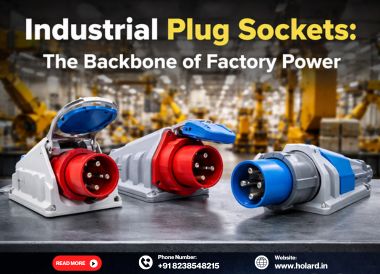
Modern industries depend on reliable electrical connections to power machines, tools, and automated systems. Whether it is a manufacturing plant, construction site, or warehouse facility, a safe and durable power connection plays a critical role in daily operations. This is where the Industrial Power Plug becomes essential.
Unlike ordinary household plugs, industrial plugs are specifically designed to handle high voltage, heavy current loads, and challenging environments. They provide safe connections that protect both equipment and workers. Because industries rely on continuous power supply, choosing the right plug ensures efficiency, safety, and long-term reliability.
This comprehensive guide explains everything you need to know about industrial plugs. From understanding their purpose to selecting the right type for your facility, this article will help businesses make informed decisions for safe heavy-duty work.
Understanding Industrial Power Plug Systems
Industrial electrical systems differ significantly from residential wiring. Factories, workshops, and construction sites require connectors that withstand higher electrical loads and harsher operating conditions.
What is an Industrial Power Plug?
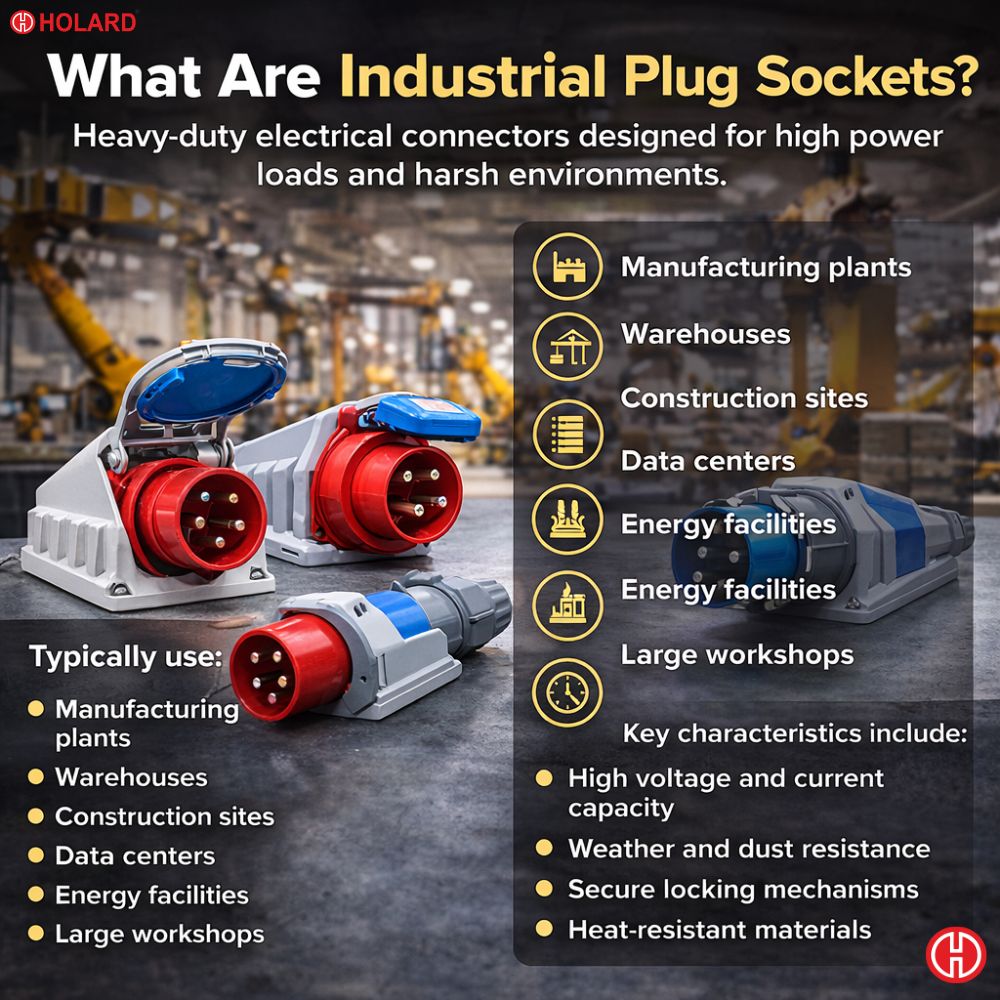
An Industrial Power Plug is a heavy-duty electrical connector designed to deliver power safely to industrial machines and equipment. These plugs typically connect with compatible industrial sockets to create a secure electrical connection.
Unlike household plugs, industrial connectors feature robust materials, weather protection, and advanced safety mechanisms. As a result, they reduce the risk of electrical accidents while supporting high-power machinery.
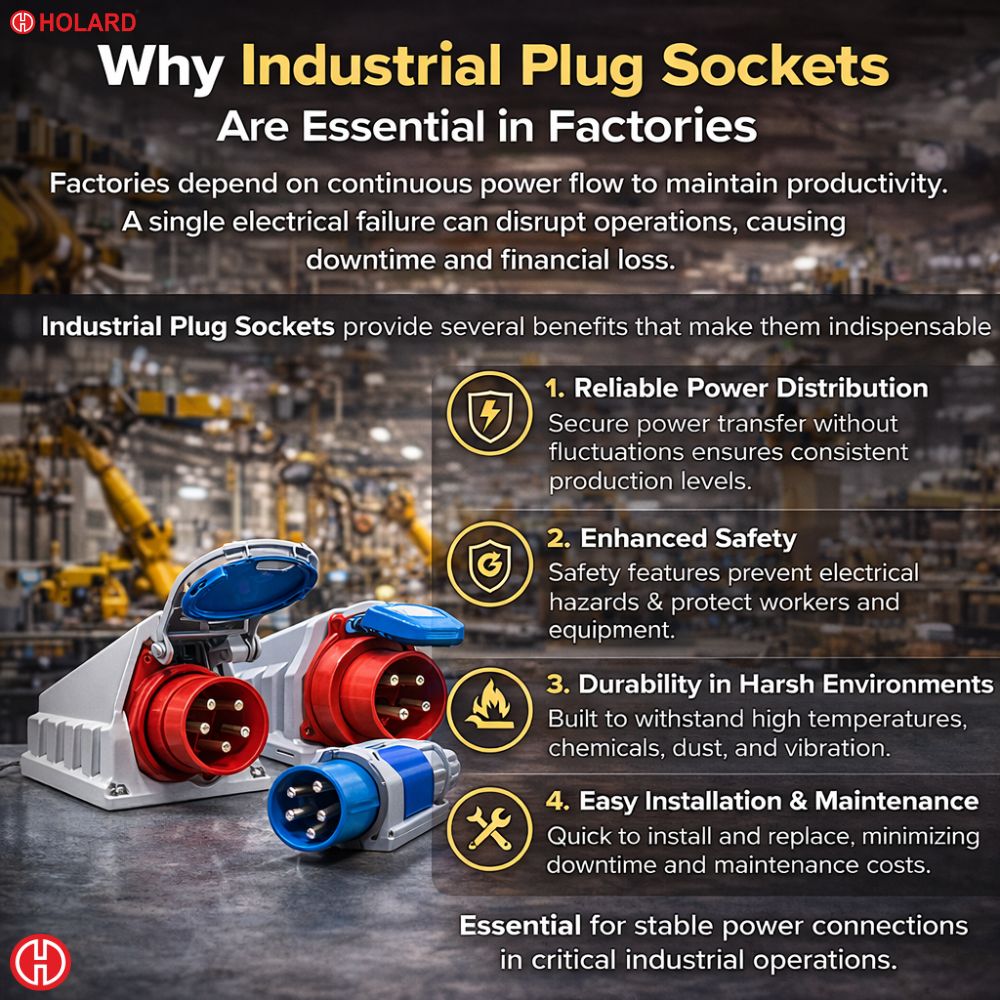
Industries rely on these connectors because they offer durability, reliability, and consistent performance under demanding conditions.
Why Industries Use Heavy-Duty Power Connectors
Industrial environments often involve high voltage systems, continuous machine operation, and exposure to dust, moisture, or heat. Standard connectors cannot handle such stress.
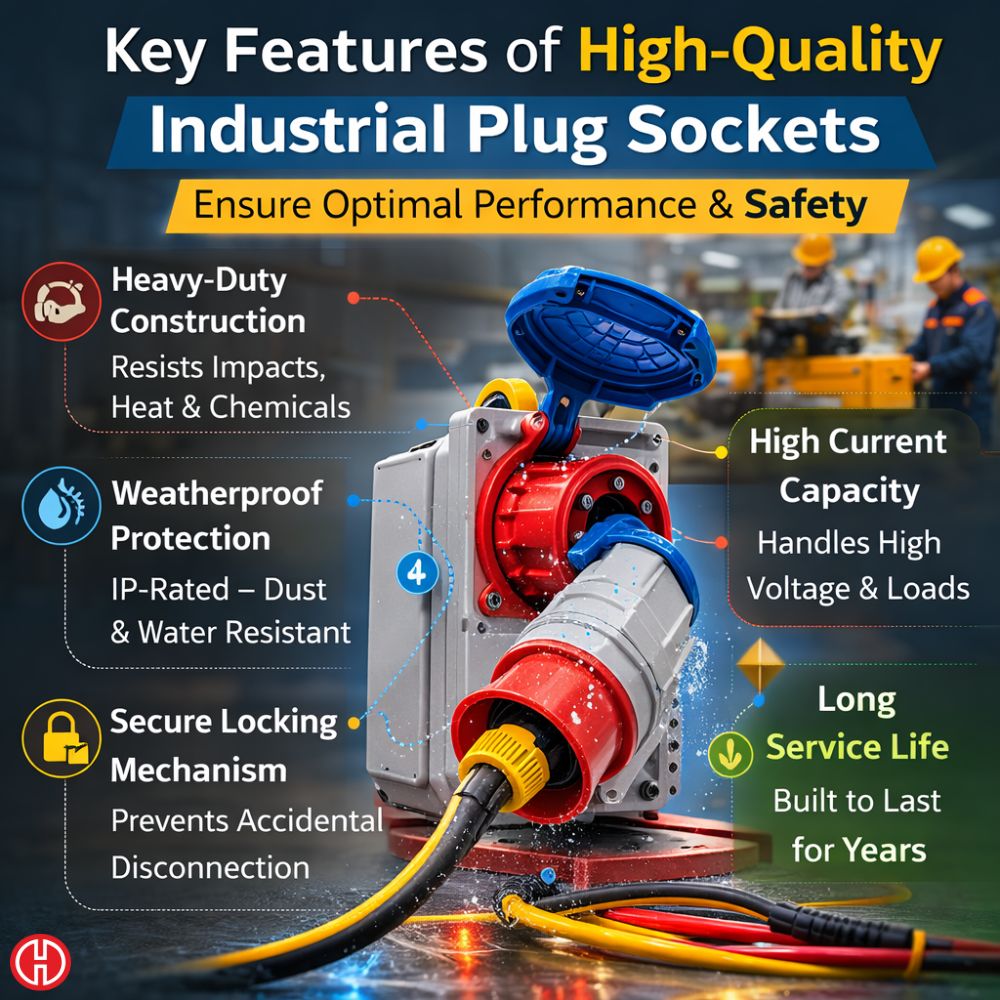
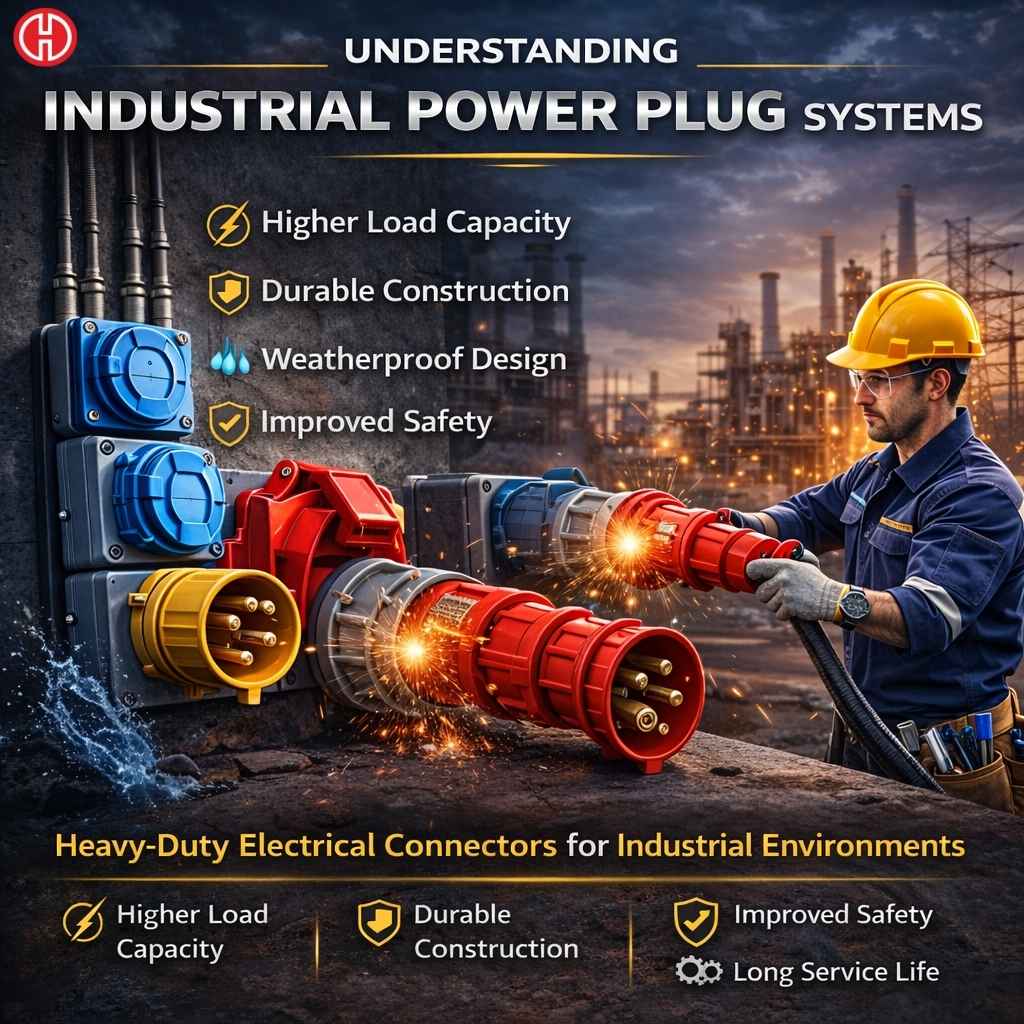
Heavy-duty connectors solve these challenges by offering:
- Higher electrical load capacity
- Durable materials resistant to impact and heat
- Weatherproof designs for outdoor environments
- Improved safety mechanisms
- Long service life
Because of these advantages, industries prefer specialized connectors to maintain safe operations.
Types of Industrial Power Plug for Heavy-Duty Applications
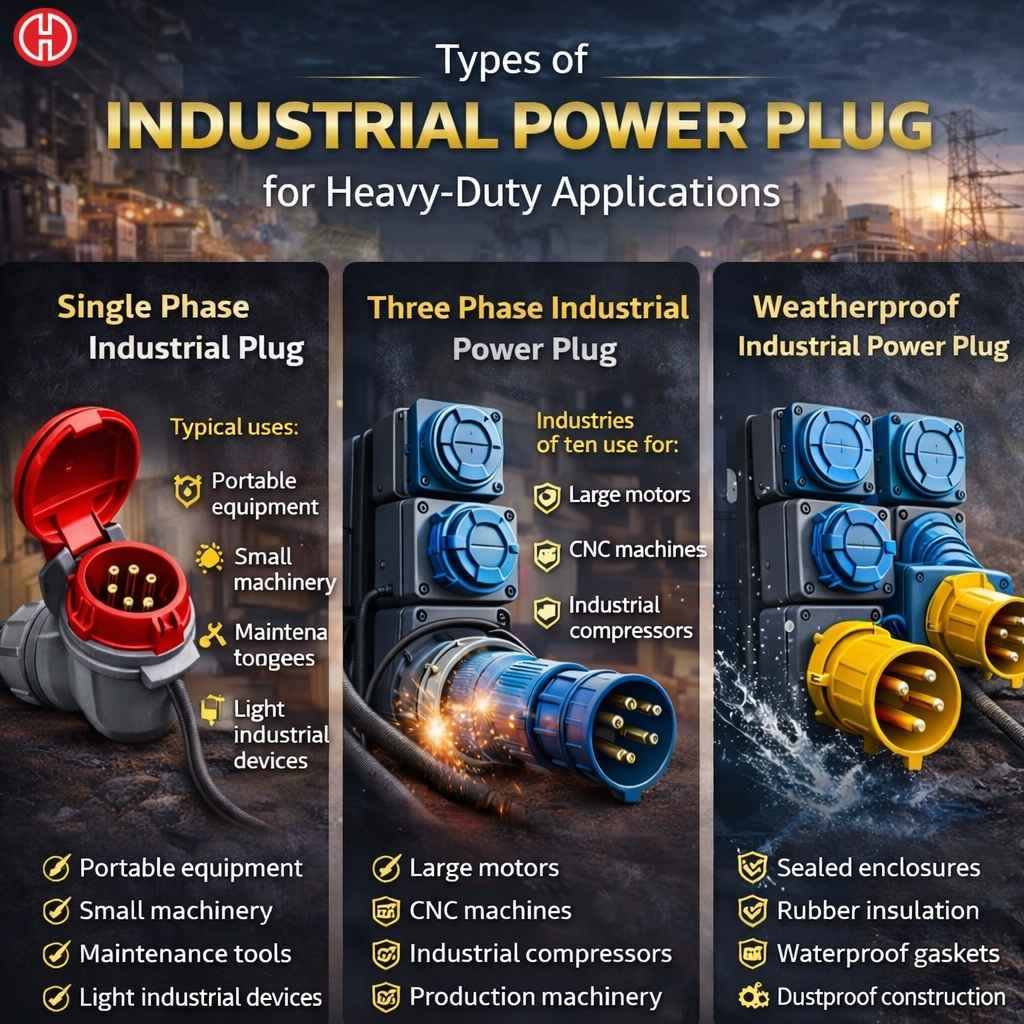
Different industries require different power capacities. Therefore, manufacturers produce several types of plugs to support various voltage and current requirements.
1. Single Phase Industrial Power Plug
Single-phase plugs are commonly used in small workshops, commercial buildings, and light industrial applications. These connectors typically support lower voltage machines.
Typical uses include:
- Portable equipment
- Small machinery
- Maintenance tools
- Light industrial devices
Although they handle less power than three-phase systems, they still provide strong safety features.
2. Three Phase Industrial Power Plug
Three-phase connectors power large machines and heavy industrial equipment. Most manufacturing plants rely on these connectors because they deliver stable and efficient power distribution.
Industries often use them for:
- Large motors
- CNC machines
- Industrial compressors
- Production machinery
- Construction equipment
These plugs support higher voltage and current levels, making them ideal for continuous heavy-duty operations.
3. Weatherproof Industrial Power Plug
Outdoor industrial environments require connectors that resist moisture, dust, and environmental damage.
Weatherproof plugs include protective features such as:
- Sealed enclosures
- Rubber insulation
- Waterproof gaskets
- Dustproof construction
These plugs are commonly used in construction sites, mining operations, and outdoor installations.
Key Components of Industrial Power Plug Design
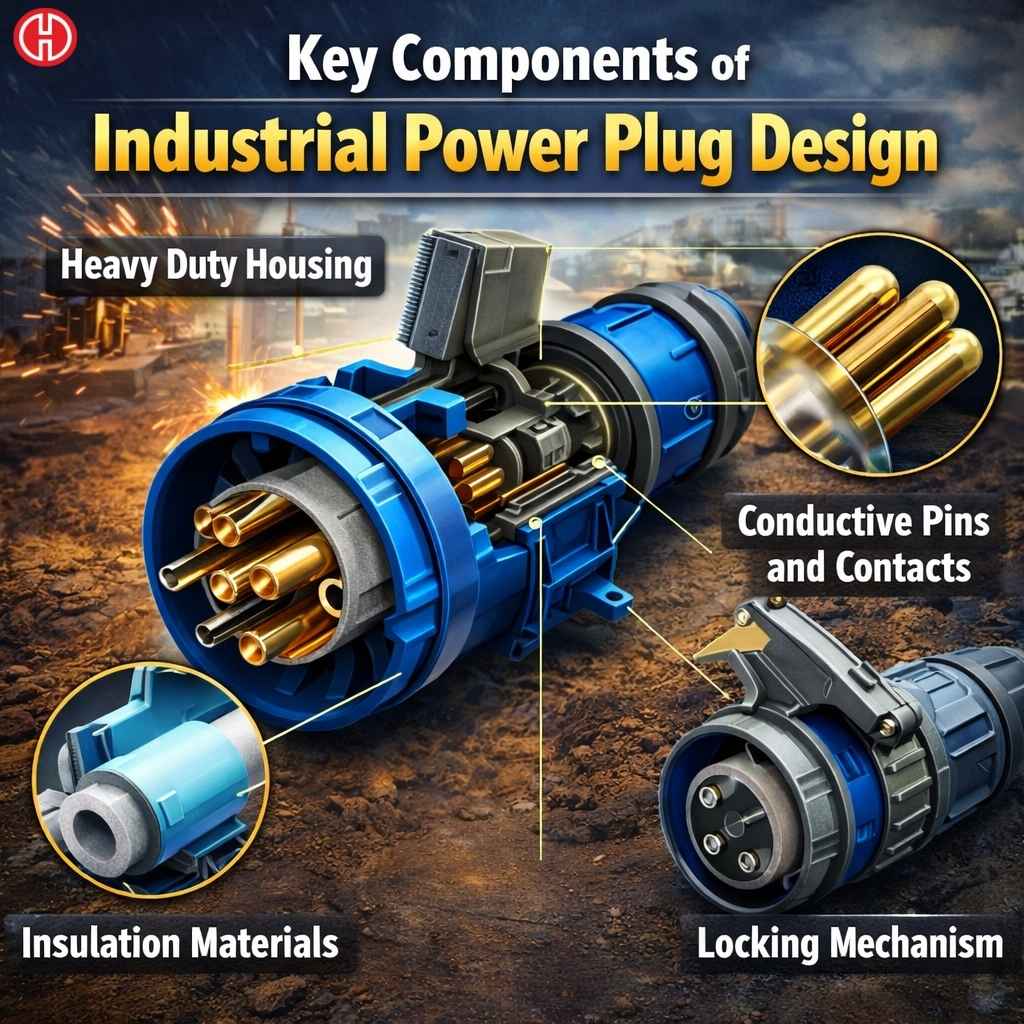
Understanding the structure of an industrial connector helps businesses choose reliable equipment.
Heavy Duty Housing
The outer casing protects internal components from damage. Manufacturers typically use high-strength plastic or metal to create durable housing.
Conductive Pins and Contacts
Conductive pins transfer electricity between the plug and socket. High-quality materials such as brass or copper ensure efficient conductivity.
Insulation Materials
Insulation prevents electrical leakage and protects users from accidental contact with live components.
Locking Mechanism
Industrial connectors often include a locking system that prevents accidental disconnection during operation.
Safety Features in Industrial Power Plug Technology
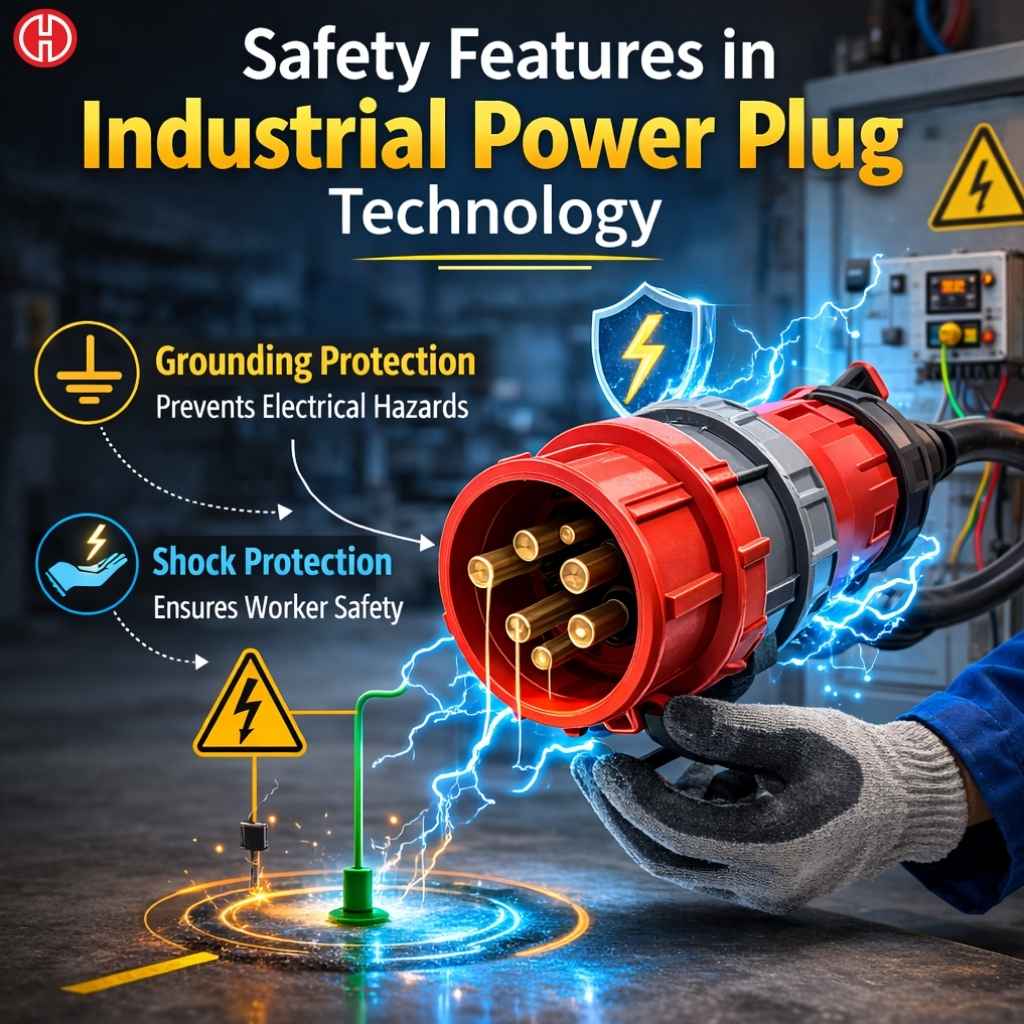
Electrical safety remains a top priority in industrial environments. Advanced plug designs include multiple safety mechanisms to reduce risks.
Grounding Protection
Grounding ensures excess electrical current safely flows into the ground instead of harming workers or damaging equipment.
Shock Protection
Insulated pins and protective casings prevent accidental contact with live components.
Overload Protection
Some systems include protective mechanisms that disconnect power during overload conditions.
Heat Resistance
Industrial connectors use materials capable of withstanding high temperatures without melting or deforming.
Benefits of Using Industrial Power Plug in Industrial Facilities
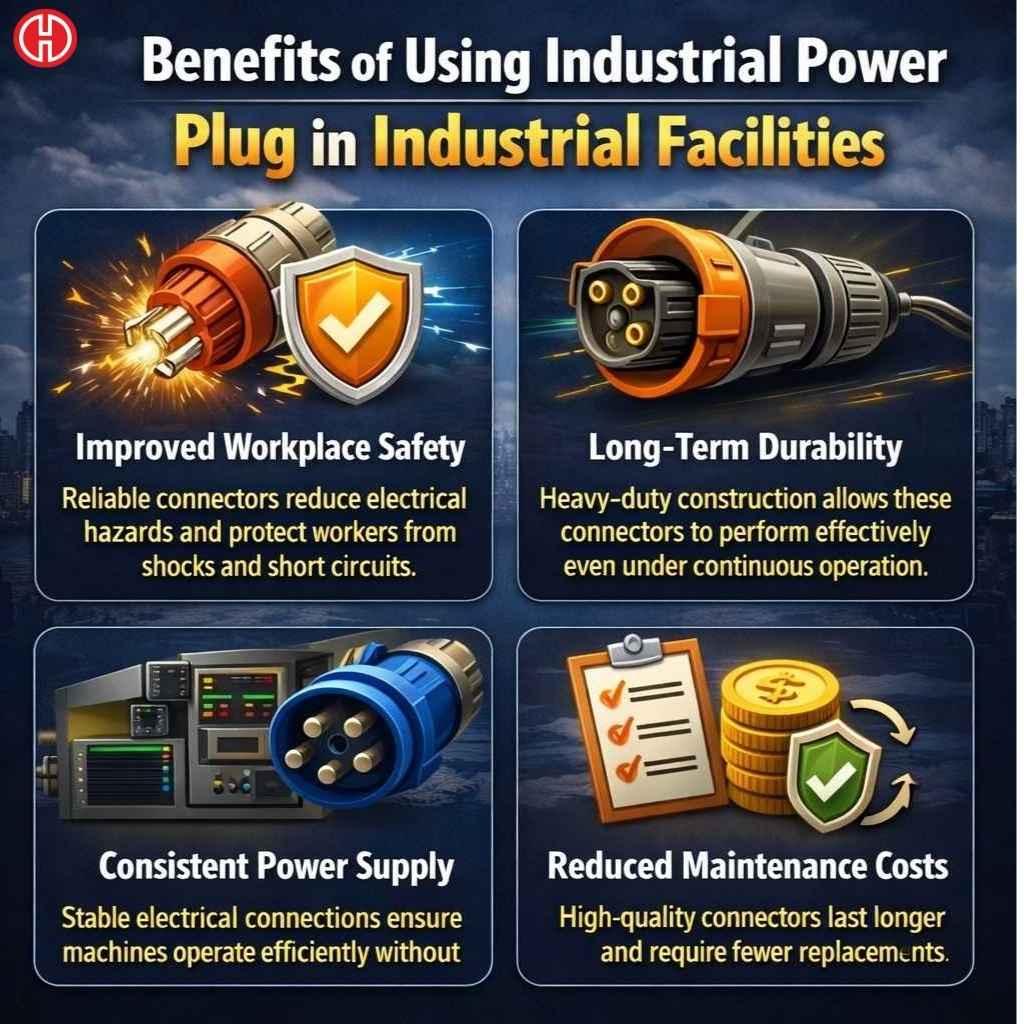
Using the right power connectors offers several operational advantages.
Improved Workplace Safety
Reliable connectors reduce electrical hazards and protect workers from shocks and short circuits.
Long-Term Durability
Heavy-duty construction allows these connectors to perform effectively even under continuous operation.
Consistent Power Supply
Stable electrical connections ensure machines operate efficiently without interruptions.
Reduced Maintenance Costs
High-quality connectors last longer and require fewer replacements.
Choosing the Right Industrial Power Plug for Your Facility
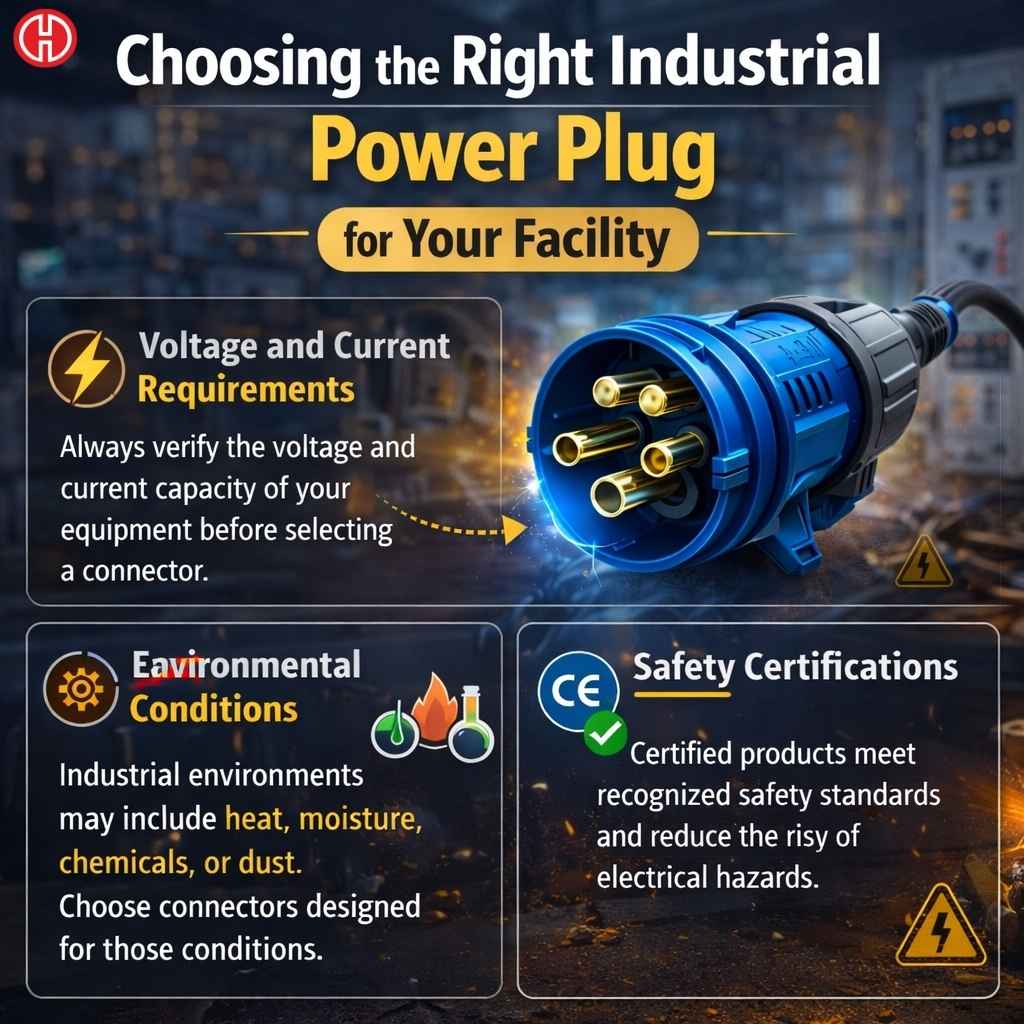
Selecting the correct connector requires careful evaluation of several factors.
Voltage and Current Requirements
Always verify the voltage and current capacity of your equipment before selecting a connector.
Environmental Conditions
Industrial environments may include heat, moisture, chemicals, or dust. Choose connectors designed for those conditions.
Equipment Compatibility
Ensure the plug matches the socket configuration used in your facility.
Safety Certifications
Certified products meet recognized safety standards and reduce the risk of electrical hazards.
Industrial Power Plug Installation Best Practices
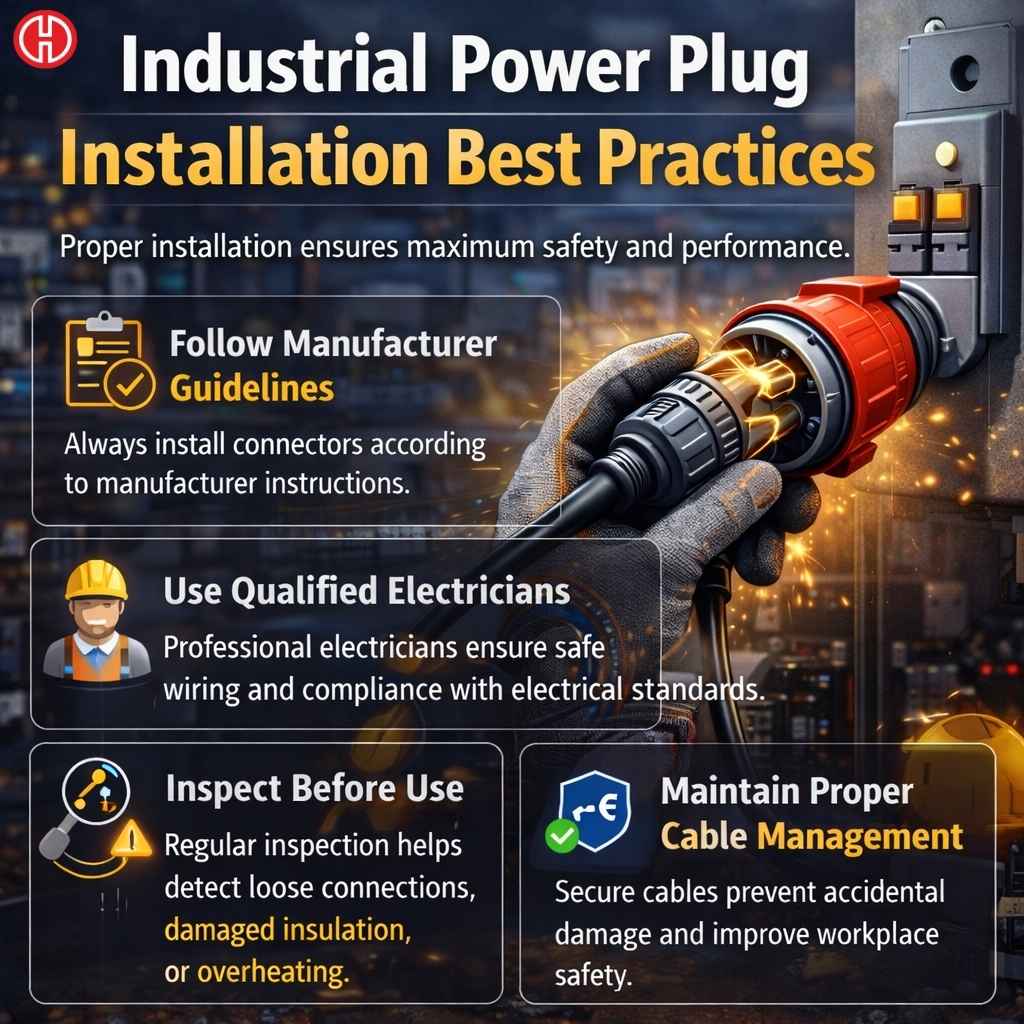
Proper installation ensures maximum safety and performance.
Follow Manufacturer Guidelines
Always install connectors according to manufacturer instructions.
Use Qualified Electricians
Professional electricians ensure safe wiring and compliance with electrical standards.
Inspect Before Use
Regular inspection helps detect loose connections, damaged insulation, or overheating.
Maintain Proper Cable Management
Secure cables prevent accidental damage and improve workplace safety.
Maintenance Tips for Industrial Power Plug Systems
Routine maintenance ensures long-term reliability and safe operation.
Regular Cleaning
Dust and debris can accumulate around connectors and reduce efficiency. Cleaning helps maintain proper contact.
Inspect for Damage
Check plugs for cracks, worn insulation, or damaged pins.
Replace Worn Components
If connectors show signs of wear, replace them immediately to avoid accidents.
Monitor Electrical Load
Ensure equipment does not exceed the rated capacity of connectors.
Common Industrial Applications of Industrial Power Plug
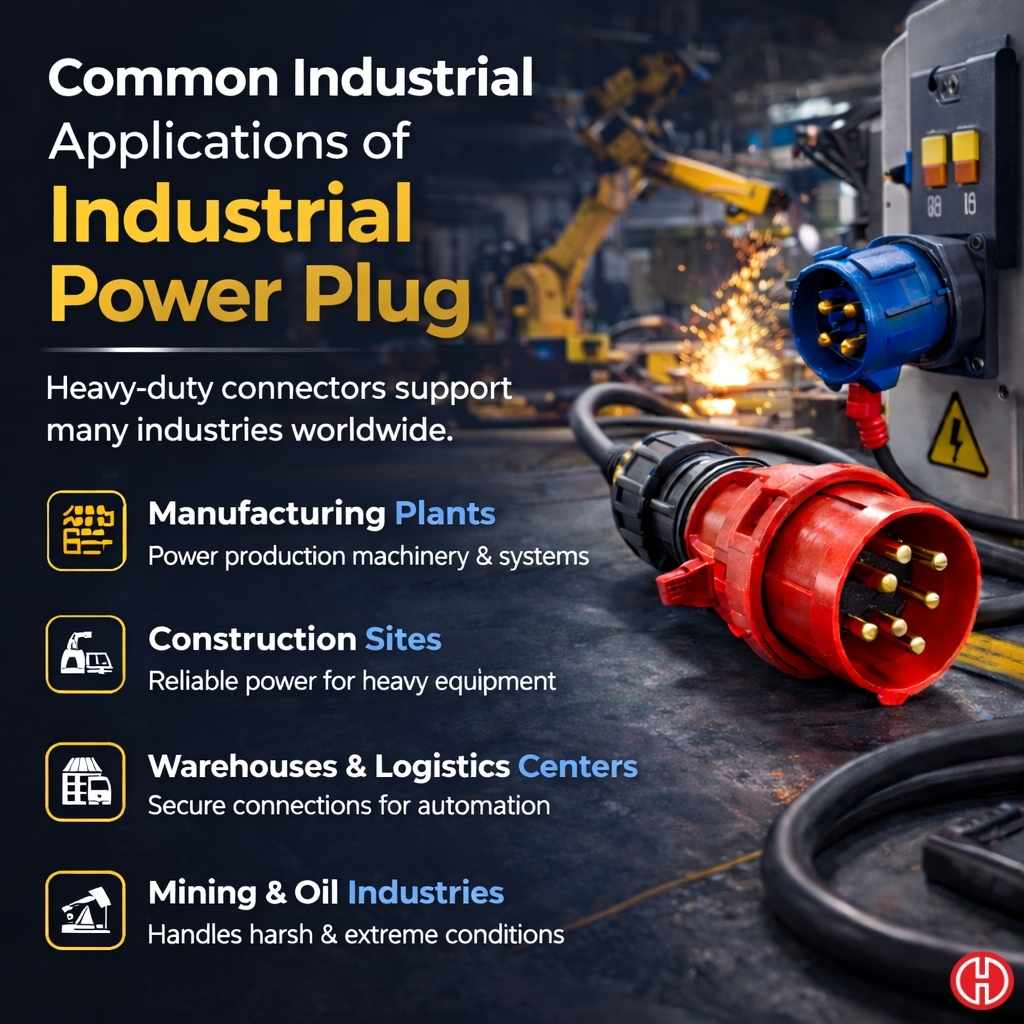
Heavy-duty connectors support many industries worldwide.
Manufacturing Plants
Factories rely on these connectors to power production machinery and assembly systems.
Construction Sites
Portable equipment and heavy machines require reliable connectors for continuous operation.
Warehouses and Logistics Centers
Material handling equipment and automated systems depend on secure electrical connections.
Mining and Oil Industries
Extreme environments demand connectors capable of handling harsh conditions.
Future Innovations in Industrial Power Plug Technology
Electrical technology continues to evolve rapidly. As industries adopt automation and smart systems, connectors also advance.
Smart Monitoring Systems
Modern connectors may include sensors that monitor temperature, load, and connection status.
Improved Materials
New materials increase durability while reducing weight and cost.
Energy Efficient Designs
Advanced connectors reduce energy loss and improve electrical efficiency.
Integration with Smart Factories
Industrial connectors will become part of connected manufacturing systems powered by IoT technology.
Why Choosing the Right Industrial Power Plug Matters
Selecting the correct connector directly affects operational safety, equipment performance, and energy efficiency.
Poor-quality connectors can lead to overheating, electrical failure, and even workplace accidents. On the other hand, high-quality industrial connectors provide stable power delivery and long-term reliability.
Businesses that invest in proper electrical infrastructure often experience fewer interruptions and improved productivity.
Final Thoughts on Choosing the Right Industrial Power Plug
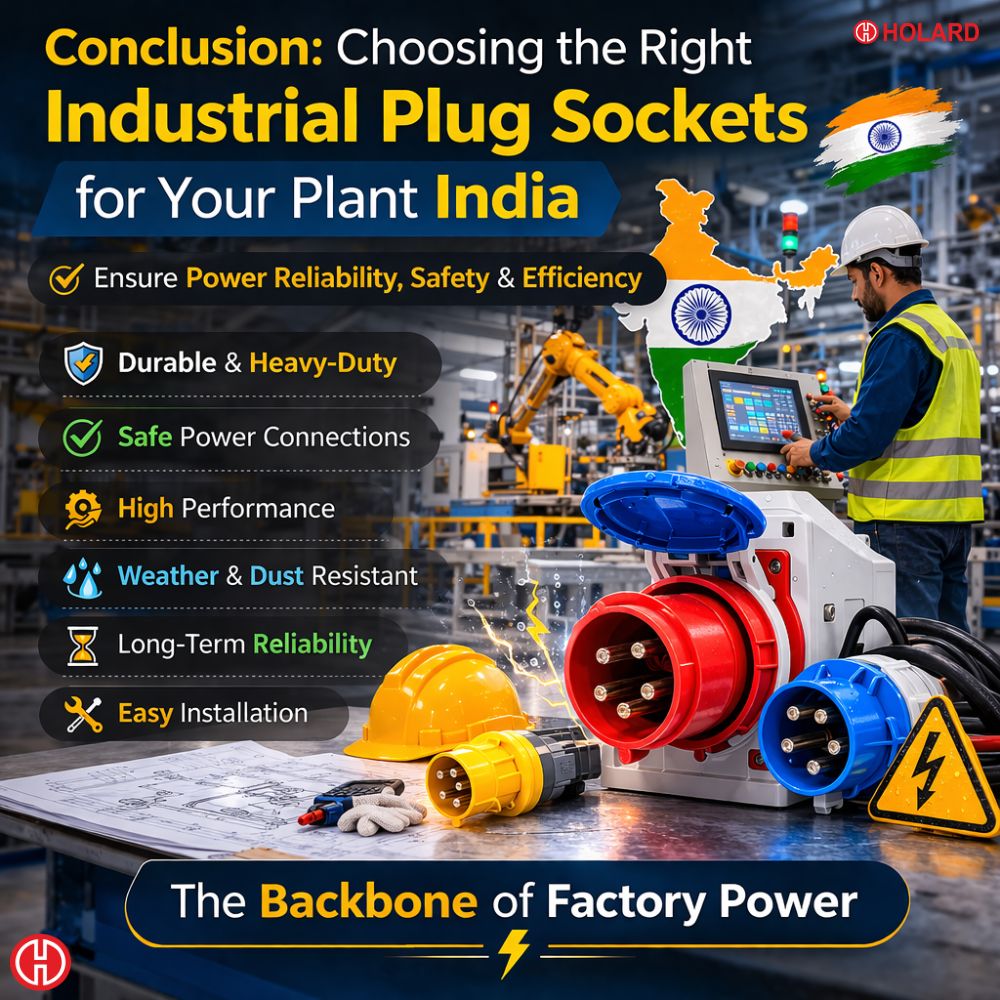
Industrial facilities require dependable electrical systems to power machines, maintain productivity, and ensure workplace safety. A well-designed Industrial Power Plug plays a critical role in delivering reliable power connections for heavy-duty operations.
By understanding different types of connectors, safety features, installation practices, and maintenance requirements, businesses can create safer and more efficient working environments.
Choosing the right connector not only protects equipment but also supports long-term operational success. As technology advances, modern connectors will continue to evolve, offering smarter, safer, and more efficient solutions for industrial power distribution.