
Best Industrial Sockets and Plugs for Energy Safety
In modern industrial environments, uninterrupted power is not a luxury—it is a necessity. From manufacturing plants and warehouses to construction sites and energy facilities, reliable electrical connections keep operations running safely and efficiently. At the heart of this power infrastructure are industrial sockets and plugs, components that are often overlooked but critically important.
Industrial sockets and plugs are designed to handle high electrical loads, extreme environmental conditions, and continuous usage without failure. Choosing the right industrial connectors can significantly reduce downtime, improve worker safety, and protect expensive equipment from electrical hazards.
This comprehensive guide explores why industrial sockets and plugs matter, how they ensure a reliable energy supply, key types and standards, and what buyers should consider when selecting the best solutions for industrial applications.
What Are Industrial Sockets and Plugs
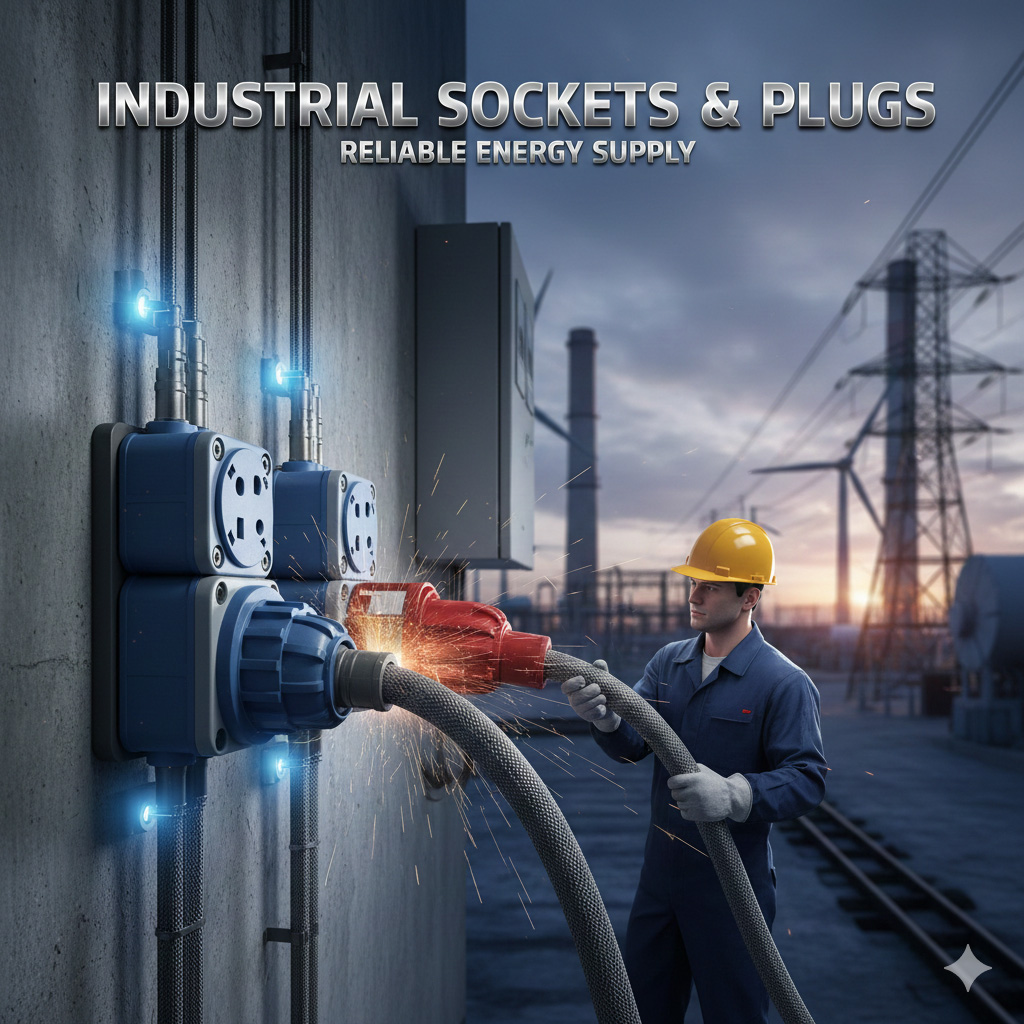
Industrial sockets and plugs are heavy-duty electrical connectors used to safely connect power sources to machinery, tools, and equipment in demanding environments. Unlike domestic connectors, these are built for:
High voltage and current ratings
Frequent connection and disconnection
Exposure to dust, moisture, chemicals, and heat
Mechanical stress and vibration
They are commonly used in industries such as manufacturing, mining, oil and gas, construction, logistics, power generation, and food processing.
Why Reliable Energy Supply Matters in Industry
A reliable energy supply directly impacts productivity, safety, and profitability. Poor electrical connections can lead to:
Unexpected power failures
Equipment damage
Production downtime
Fire hazards and electrical accidents
Increased maintenance costs
High-quality industrial sockets and plugs help eliminate these risks by ensuring stable power transmission even in harsh conditions. This reliability is essential for automated systems, heavy machinery, and mission-critical operations.
Key Benefits of Industrial Sockets and Plugs
1. Enhanced Safety Standards
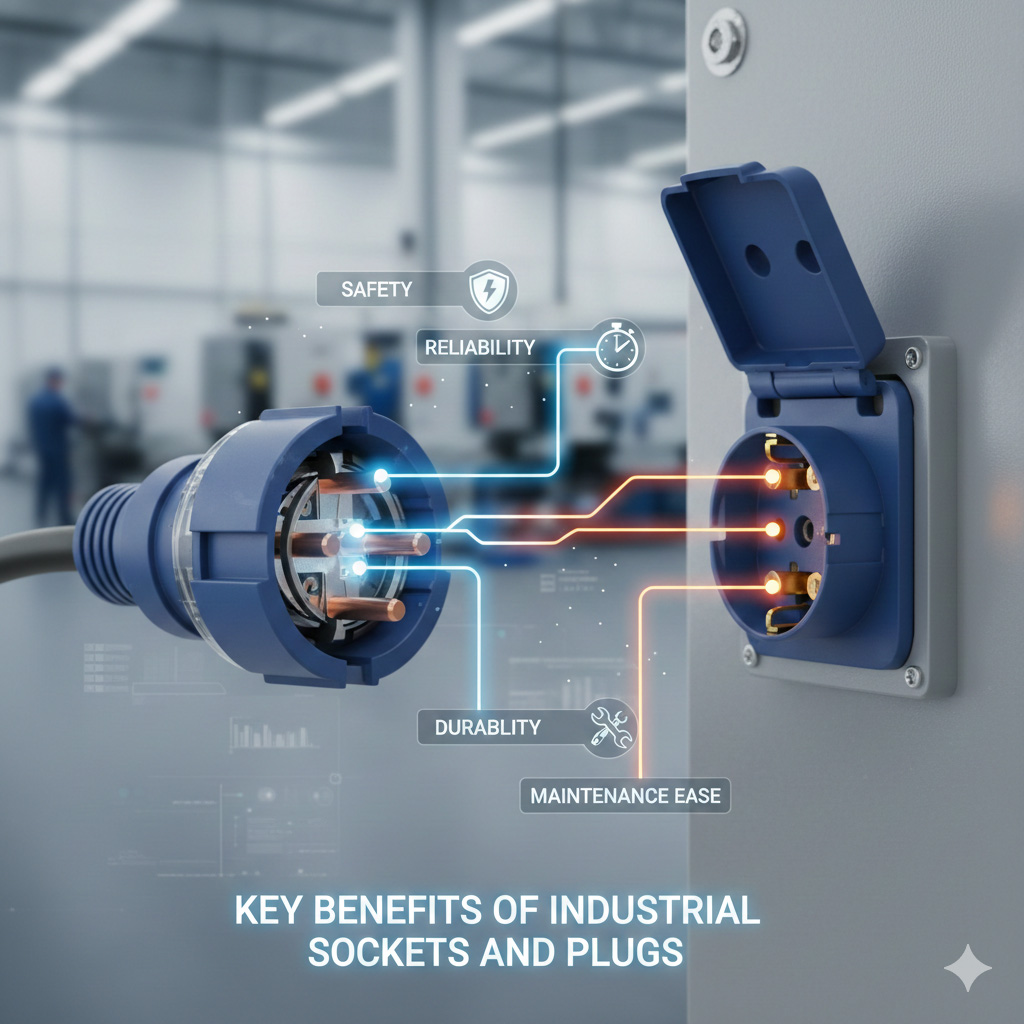
Industrial sockets and plugs are designed with safety as a priority. Features such as locking mechanisms, insulated housings, and earth protection reduce the risk of electric shock and accidental disconnection.
2. Long Service Life
Made from robust materials like high-grade thermoplastics, rubber, and corrosion-resistant metals, industrial connectors are built to last. This durability minimizes replacement frequency and long-term costs.
3. High Load Capacity
Industrial connectors support higher current and voltage ratings, making them suitable for heavy equipment and continuous operation without overheating.
4. Environmental Resistance
Many industrial sockets and plugs are rated for water and dust protection, ensuring reliable performance in outdoor or washdown environments.
Types of Industrial Sockets and Plugs
1. IEC 60309 Connectors
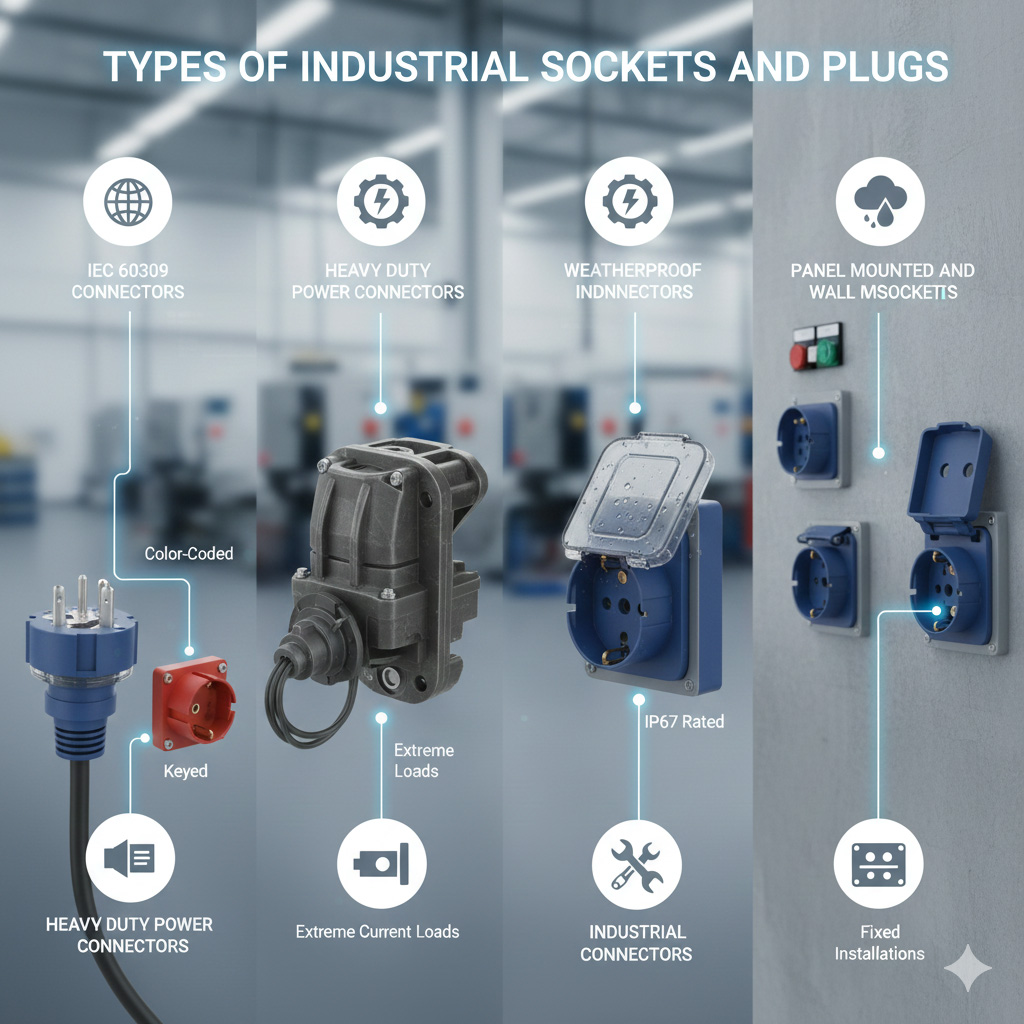
These are among the most widely used industrial connectors worldwide. IEC 60309 sockets and plugs are color-coded and keyed to prevent mismatched connections, enhancing safety and compliance.
2. Heavy Duty Power Connectors
Designed for extreme current loads, these connectors are ideal for mining, power generation, and large machinery applications.
3. Weatherproof Industrial Connectors
These connectors offer high ingress protection ratings, making them suitable for outdoor installations and harsh environments.
4. Panel Mounted and Wall Mounted Sockets
Used in control panels and fixed installations, these provide organized and secure power distribution within industrial facilities.
Importance of IP Ratings in Industrial Sockets and Plugs
Ingress Protection ratings define how well a socket or plug resists dust and water. Common ratings include:
IP44 for splash protection
IP67 for temporary water immersion
IP68 for continuous immersion
Choosing the right IP rating ensures uninterrupted power supply and reduces the risk of electrical failure due to environmental exposure.
Applications of Industrial Sockets and Plugs
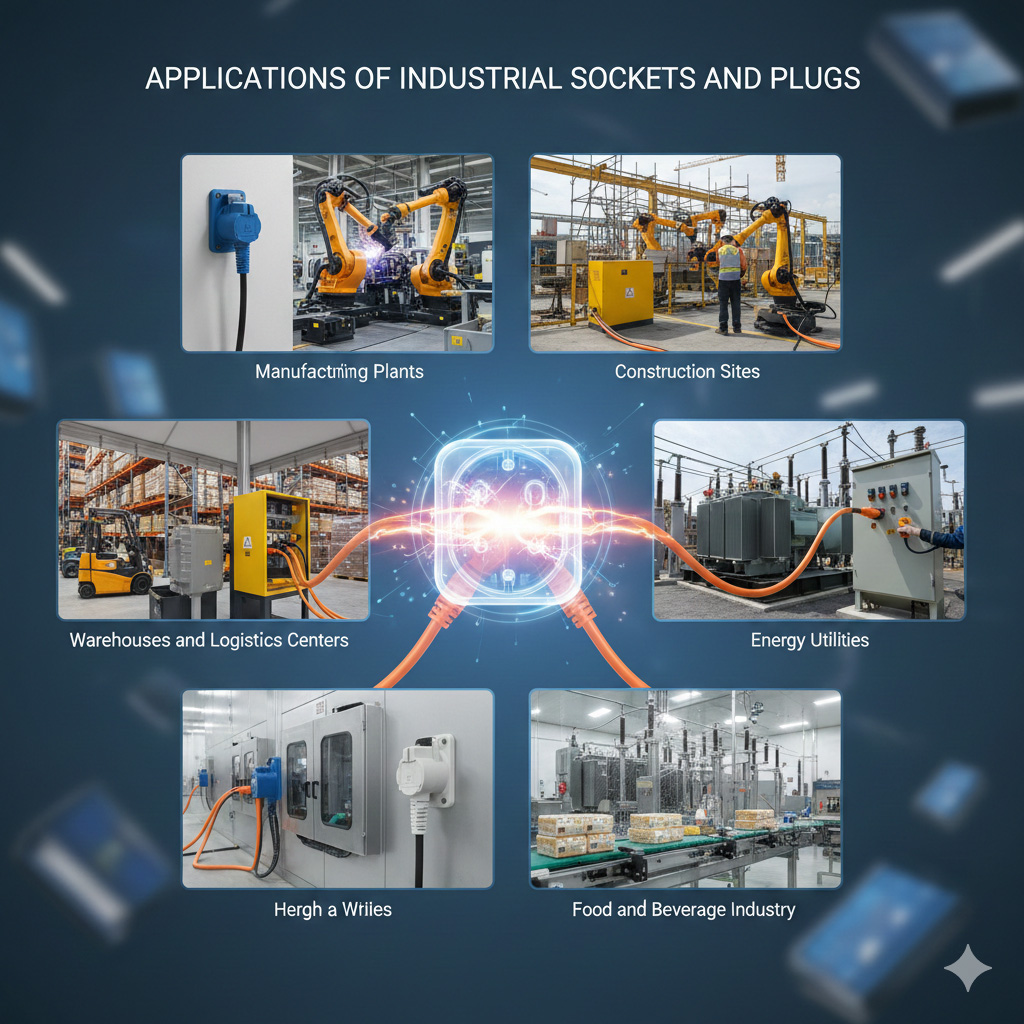
1. Manufacturing Plants
Used to power production lines, robotic systems, and heavy machinery.
2. Construction Sites
Provide safe and portable power connections for tools and temporary equipment.
3. Warehouses and Logistics Centers
Support automated conveyors, forklifts, and charging stations.
4. Energy and Utilities
Essential for generators, transformers, and distribution equipment.
5. Food and Beverage Industry
Hygienic and waterproof connectors are critical for washdown areas.
How to Choose the Right Industrial Sockets and Plugs
Evaluate Power Requirements
Determine voltage, current rating, and frequency before selecting a connector.
Consider Environmental Conditions
Choose materials and IP ratings suitable for heat, moisture, dust, or chemicals.
Check Compliance and Certifications
Ensure connectors meet international and regional standards for safety and performance.
Prioritize Ease of Installation
Well-designed connectors reduce installation time and maintenance effort.
Role of Industrial Sockets and Plugs in Energy Efficiency
Reliable connectors reduce power losses caused by loose connections or overheating. This efficiency contributes to:
Lower energy consumption
Reduced equipment wear
Improved sustainability goals
In industries focused on energy optimization, upgrading to high-quality industrial sockets and plugs can deliver measurable benefits.
Maintenance Tips for Long-Term Reliability
Inspect connectors regularly for wear or damage
Clean sockets and plugs to prevent dust buildup
Replace worn components immediately
Ensure proper installation and tightening
Proactive maintenance helps maintain a stable energy supply and extends equipment lifespan.
Future Trends in Industrial Power Connectivity
The demand for smarter, safer, and more efficient industrial power solutions is growing. Future industrial sockets and plugs are expected to feature:
Enhanced safety monitoring
Improved materials for extreme environments
Compatibility with smart industrial systems
As industries move toward automation and digitalization, reliable power connectors will continue to play a crucial role.
Conclusion:
Reliable Industrial Sockets and Plugs for Factories
Industrial sockets and plugs are fundamental components of a reliable energy supply system. Their impact on safety, efficiency, and operational continuity makes them a critical investment for any industrial facility.
By choosing the right industrial sockets and plugs, businesses can reduce downtime, protect equipment, and ensure safe power distribution across all operations. Whether for manufacturing, construction, or energy sectors, high-quality industrial connectors are essential for long-term success.