
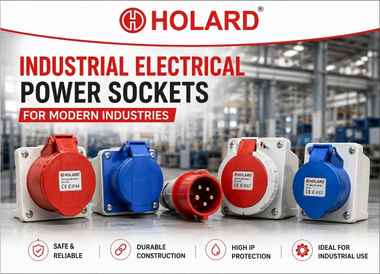
In today’s fast-paced industrial environment, reliable electrical connectivity plays a critical role in maintaining productivity, safety, and operational efficiency. Whether you manage a manufacturing plant, warehouse, processing facility, construction site, or commercial infrastructure project, selecting the right Electrical Power Sockets directly impacts equipment performance and workplace safety.
Modern industries rely heavily on uninterrupted power distribution systems. Therefore, investing in high-quality electrical power sockets is not merely a purchasing decision—it is a strategic investment that supports long-term operational success. Furthermore, as industrial automation continues to expand, businesses require electrical components capable of handling demanding environments while ensuring consistent power delivery.
This comprehensive guide explains everything you need to know about electrical power sockets, including their features, types, applications, benefits, selection criteria, maintenance practices, and future trends.
Why Electrical Power Sockets Matter in Modern Industries
Industrial facilities operate a wide range of electrical equipment that requires stable and secure power connections. Electrical power sockets serve as the interface between power sources and industrial machinery.
Unlike residential sockets, industrial-grade solutions are specifically designed to handle:
- High electrical loads
- Continuous operation
- Harsh environmental conditions
- Mechanical stress
- Moisture and dust exposure
- Industrial safety requirements
As a result, businesses experience fewer power interruptions, reduced downtime, and enhanced workplace safety.
Moreover, properly selected sockets help protect expensive equipment from electrical faults and voltage-related issues.
Understanding Electrical Power Sockets
Electrical power sockets are specialized devices that provide safe electrical connections between power supplies and electrical equipment. They are engineered to support different voltage levels, current capacities, and industrial applications.
Modern electrical power sockets incorporate advanced safety features that prevent accidental contact with live components while ensuring reliable connectivity.
Key Functions of Electrical Power Sockets
- Deliver power efficiently
- Ensure operator safety
- Protect connected equipment
- Prevent electrical hazards
- Support industrial automation systems
- Enable quick equipment connection and disconnection
Because industries depend on continuous operations, choosing appropriate socket systems becomes essential.
Types of Electrical Power Sockets Used in Industries
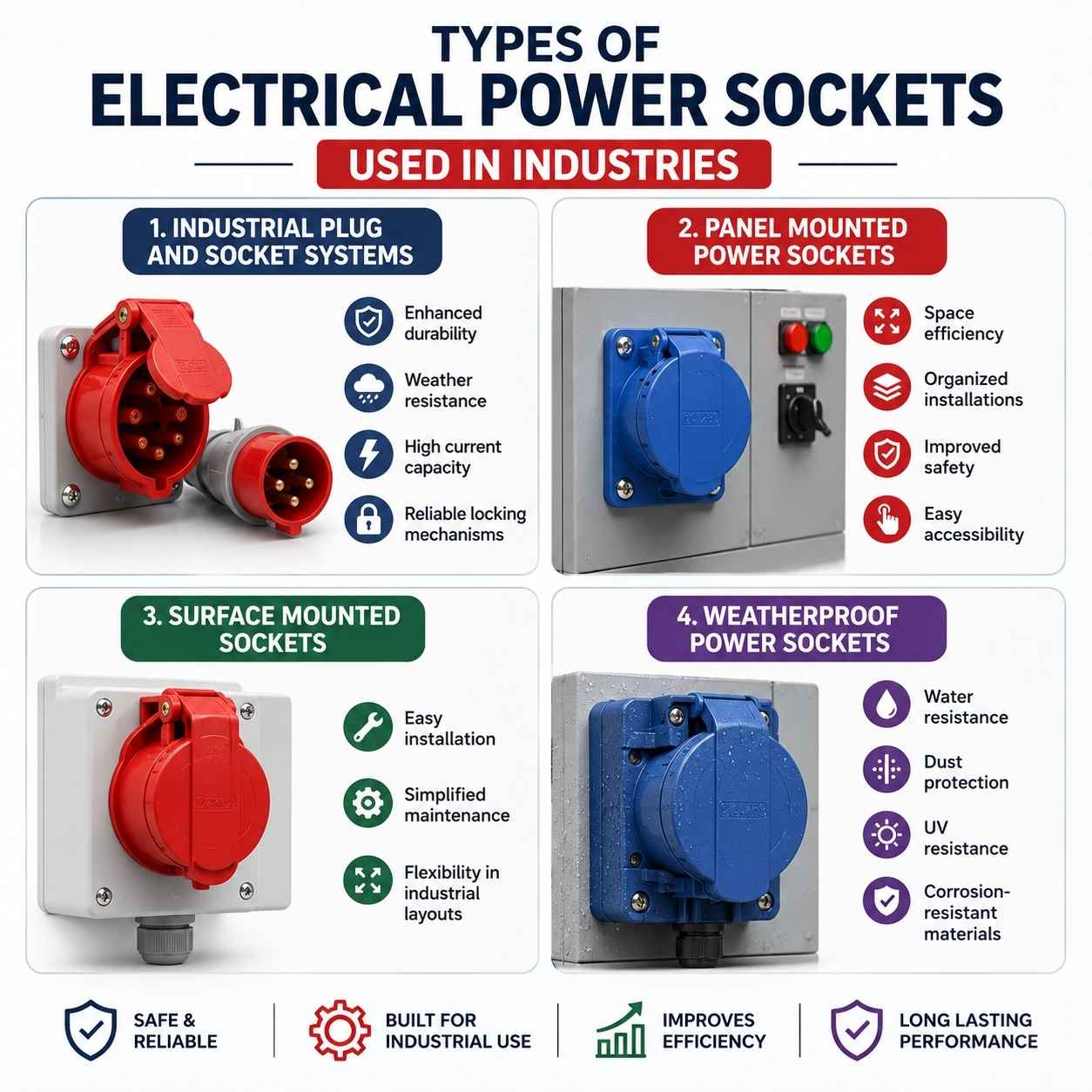
Different industrial environments require different socket configurations. Understanding available options helps businesses make informed decisions.
1. Industrial Plug and Socket Systems
Industrial plug and socket combinations provide secure electrical connections for heavy-duty applications.
Key advantages include:
- Enhanced durability
- Weather resistance
- High current capacity
- Reliable locking mechanisms
These systems are commonly used in manufacturing plants, workshops, and construction sites.
2. Panel Mounted Power Sockets
Panel-mounted solutions integrate directly into control panels and electrical enclosures.
Benefits include:
- Space efficiency
- Organized installations
- Improved safety
- Easy accessibility
Industries often use them in automation systems and machine control panels.
3. Surface Mounted Sockets
Surface-mounted electrical power sockets install directly on walls, machinery, or support structures.
Advantages include:
- Easy installation
- Simplified maintenance
- Flexibility in industrial layouts
They are ideal for warehouses, production floors, and utility areas.
4. Weatherproof Power Sockets
Outdoor and demanding industrial environments require weatherproof solutions.
Features include:
- Water resistance
- Dust protection
- UV resistance
- Corrosion-resistant materials
These sockets perform exceptionally well in outdoor installations.
Electrical Power Sockets for Manufacturing Industries
Manufacturing facilities represent one of the largest users of industrial electrical components.
1. Production Line Applications
Production equipment requires stable power connections to maintain efficiency.
Electrical power sockets support:
- Conveyor systems
- Packaging machinery
- CNC equipment
- Industrial robots
- Assembly lines
Reliable connectivity helps prevent costly downtime.
2. Heavy Machinery Operations
Heavy industrial machinery demands robust electrical infrastructure.
Common examples include:
- Hydraulic presses
- Injection molding machines
- Compressors
- Industrial pumps
- Material handling systems
Selecting high-capacity sockets ensures consistent performance.
3. Automated Manufacturing Systems
Industry 4.0 technologies continue transforming production facilities worldwide.
Modern electrical power sockets support:
- Smart factories
- Connected devices
- Industrial IoT systems
- Automated control equipment
Consequently, businesses achieve greater operational efficiency.
Key Features to Look for in Electrical Power Sockets
Choosing the right product requires careful evaluation of several important factors.
1. Current Rating
The current rating determines how much electrical current the socket can safely handle.
Popular industrial ratings include:
- 16A
- 32A
- 63A
- 125A
Always select a socket that matches operational requirements.
2. Voltage Compatibility
Industrial applications often require different voltage configurations.
Common voltage ranges include:
- 110V
- 230V
- 415V
- Higher industrial voltages
Verify compatibility before installation.
3. IP Protection Rating
IP ratings indicate protection against dust and moisture.
Examples include:
4. IP44
Provides protection against solid particles and water splashes.
5 IP67
Offers superior protection against dust and temporary water immersion.
Industries operating in harsh environments typically prefer higher IP ratings.
6. Material Quality
Industrial electrical power sockets should use high-quality materials such as:
- Engineering plastics
- Thermoplastic compounds
- Flame-retardant materials
- Corrosion-resistant metals
Durable construction ensures long-term reliability.
Safety Benefits of High-Quality Electrical Power Sockets
Safety remains a top priority in industrial operations.
1. Reduced Electrical Hazards
Quality sockets minimize risks associated with:
- Electrical shock
- Short circuits
- Arc faults
- Overheating
This protection benefits both personnel and equipment.
2. Enhanced Workplace Compliance
Industrial facilities must comply with safety regulations and standards.
Reliable electrical power sockets help organizations meet compliance requirements while reducing liability risks.
3. Improved Equipment Protection
Electrical failures can damage expensive machinery.
High-quality sockets provide secure connections that help protect critical assets.
How Electrical Power Sockets Improve Operational Efficiency
Efficient power distribution directly impacts productivity.
1. Faster Equipment Connectivity
Industrial operators frequently connect and disconnect equipment.
Reliable socket systems streamline these processes and reduce downtime.
2. Reduced Maintenance Costs
Durable components require fewer replacements and repairs.
As a result, organizations lower maintenance expenses over time.
3. Better Energy Distribution
Well-designed electrical systems improve power delivery efficiency and support consistent equipment performance.
Electrical Power Sockets in Harsh Industrial Environments
Many industries operate under demanding conditions.
1. Food Processing Facilities
Food manufacturing environments require equipment capable of withstanding:
- Frequent washdowns
- Moisture exposure
- Cleaning chemicals
Specialized socket systems meet these requirements.
2. Chemical Processing Plants
Chemical facilities expose electrical components to corrosive substances.
Corrosion-resistant sockets enhance reliability and longevity.
3. Construction Sites
Construction projects demand rugged electrical solutions.
Electrical power sockets used in these environments must withstand:
- Impact
- Dust
- Weather conditions
- Frequent relocation
Durable designs support continuous operation.
4. Mining Operations
Mining environments require heavy-duty power distribution systems capable of handling extreme operating conditions.
Electrical Power Sockets Comparison Table
| Socket Type | Typical Application | Key Advantage | Suitable Environment |
|---|---|---|---|
| Single-Phase Socket | Small industrial equipment | Simple power connection | Indoor industrial areas |
| Three-Phase Socket | Heavy machinery | Supports higher industrial loads | Factories & workshops |
| Heavy-Duty Socket | Industrial machinery & tools | Strong and durable construction | Demanding environments |
| Waterproof Socket | Outdoor equipment | Protection from moisture | Outdoor & wet areas |
| Weather-Resistant Socket | Construction & infrastructure | Better environmental protection | Outdoor applications |
Common Mistakes When Choosing Electrical Power Sockets
Many businesses overlook critical factors during selection.
Ignoring Future Expansion
Industrial facilities often expand operations.
Selecting scalable socket systems helps accommodate future growth.
Choosing Based Only on Price
Lower-cost products may appear attractive initially.
However, poor-quality components often lead to:
- Frequent failures
- Higher maintenance costs
- Increased downtime
Long-term value matters more than upfront savings.
Overlooking Environmental Conditions
Environmental factors significantly affect performance.
Always evaluate:
- Temperature
- Humidity
- Dust exposure
- Water exposure
- Chemical exposure
Proper assessment improves product selection.
Installation Best Practices
Proper installation maximizes performance and safety.
Follow Manufacturer Recommendations
Installation guidelines help ensure correct operation.
Always follow specified procedures.
Use Qualified Electrical Professionals
Professional installation reduces risks associated with improper wiring and configuration.
Perform Regular Inspections
Routine inspections identify potential issues before failures occur.
Inspection areas include:
- Physical damage
- Loose connections
- Corrosion
- Heat discoloration
Preventive maintenance improves reliability.
Maintenance Tips for Long-Term Performance
Regular maintenance extends equipment lifespan.
Keep Components Clean
Remove dirt, dust, and debris from socket assemblies regularly.
Check for Wear and Damage
Inspect components for:
- Cracks
- Burn marks
- Corrosion
- Loose terminals
Early detection prevents major problems.
Test Connections Periodically
Regular testing ensures electrical integrity and operational reliability.
Future Trends in Electrical Power Sockets
Industrial electrical technology continues evolving rapidly.
Smart Connectivity Solutions
Modern facilities increasingly adopt intelligent electrical systems.
Future developments include:
- Remote monitoring
- Predictive maintenance
- Performance analytics
- Smart diagnostics
Industry 4.0 Integration
Advanced socket systems support connected manufacturing environments and digital transformation initiatives.
Enhanced Safety Technologies
Manufacturers continue developing innovative features that improve protection and operational reliability.
Why Businesses Should Invest in Premium Electrical Power Sockets
Premium industrial electrical components deliver measurable benefits.
Organizations can achieve:
- Improved operational efficiency
- Enhanced workplace safety
- Reduced downtime
- Lower maintenance costs
- Better equipment protection
- Greater long-term value
Investing in quality solutions helps businesses remain competitive while supporting future growth.
Frequently Asked Questions About Electrical Power Sockets
Electrical Power Sockets provide a secure connection between electrical equipment and a power supply. Industries use them for machinery, tools, motors, control systems, conveyors, and other electrical equipment.
Choose a socket based on voltage, current rating, phase configuration, number of poles, grounding requirements, environmental conditions, and equipment compatibility. Also consider the required protection rating and installation method.
Common types include single-phase, three-phase, heavy-duty, waterproof, weather-resistant, switched, and unswitched industrial sockets. The right type depends on the equipment and operating environment.
Single-phase sockets generally serve lower-power equipment and common electrical tools, while three-phase sockets support equipment that requires three-phase power, such as large motors, compressors, pumps, and industrial machinery.
Some industrial sockets are designed for outdoor use and provide protection against moisture, dust, and environmental exposure. Always check the product's IP rating and manufacturer specifications before outdoor installation.
No FAQ found.
Check the voltage, current rating, phase, poles, grounding arrangement, IP rating, material, cable compatibility, mounting requirements, and applicable safety standards. These factors help ensure a suitable and reliable connection.
Heavy-duty sockets offer robust construction for demanding environments where equipment experiences frequent use, vibration, movement, impact, or mechanical stress. They can provide a more dependable connection for industrial applications.
Use correctly rated products, ensure proper grounding, follow manufacturer installation instructions, protect connections from unsuitable environmental conditions, manage cables correctly, and inspect sockets regularly for damage or overheating.
Inspection frequency depends on the equipment, operating environment, usage level, and applicable safety requirements. Facilities with heavy usage or harsh conditions should establish an appropriate routine inspection and maintenance schedule.
Industrial power sockets are commonly used in manufacturing plants, construction sites, warehouses, workshops, processing facilities, infrastructure projects, and other locations that require reliable electrical connections.
No FAQ found.
Conclusion: Finding Reliable Electrical Power Sockets for Industry
Electrical power distribution remains the foundation of modern industrial operations, and Electrical Power Sockets play a crucial role in ensuring safe, efficient, and reliable connectivity. From manufacturing plants and processing facilities to construction sites and automated production environments, selecting the right socket system directly influences productivity, equipment performance, and workplace safety.
Businesses that prioritize quality, durability, safety compliance, and future scalability gain significant advantages in today’s competitive industrial landscape. By understanding socket types, evaluating key features, following installation best practices, and maintaining equipment properly, organizations can build a dependable electrical infrastructure that supports long-term success. HOLARD offers reliable electrical connection solutions designed to meet the demanding requirements of modern industrial applications.
As industrial technologies continue advancing, modern electrical power sockets will become even more intelligent, efficient, and essential for powering the next generation of industrial innovation.