
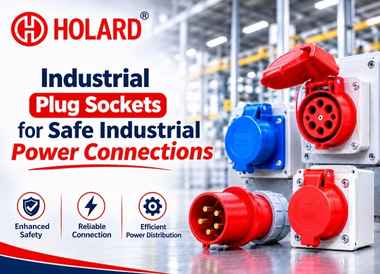
Industrial facilities depend on reliable power connections to operate machinery, production lines, and essential systems. From manufacturing plants and engineering workshops to warehouses and commercial buildings, every workplace needs suitable components to maintain smooth operations. Among these components, Industrial Plug Sockets play an important role in connecting equipment with compatible power supplies.
Unlike ordinary household accessories, heavy-duty connectors are designed for different voltage requirements, current ratings, pin configurations, and demanding operating environments. They are available in various designs to support different machinery and installation needs.
Selecting the right connectors helps businesses organize power distribution, simplify equipment maintenance, and support workplace safety. However, choosing suitable products requires an understanding of their specifications, construction, and intended applications.
This guide explores the different types of connectors, their important features, applications, selection criteria, and maintenance practices.
Understanding Industrial Plug and Socket Systems
A plug and socket system creates a detachable connection between a power source and compatible machinery. The plug connects to a cable, while the socket provides a matching connection point. Together, these components allow equipment to receive power according to its technical specifications.
Manufacturing facilities use different connection arrangements depending on machinery requirements, operating loads, and workplace conditions. For example, a production unit may need separate connections for motors, compressors, welding machines, pumps, and portable tools.
Therefore, selecting compatible components helps businesses maintain an organized and functional power distribution system.
How Industrial Plug and Sockets Work
These connectors use compatible contact arrangements to establish a secure connection. When a suitable plug enters its matching socket, the contacts connect according to the product’s design.
Several components contribute to this process:
- Plug Body: Provides the external structure and supports the contact pins.
- Socket Housing: Holds and protects the internal connection points.
- Contact Pins: Establish contact between compatible components.
- Cable Entry: Provides the connection point for connecting cables.
- Insulating Material: Separates conductive parts and supports user safety.
- Locking Mechanism: Helps prevent accidental disconnection in products designed with locking features.
Each component serves a specific purpose. Consequently, buyers should evaluate construction quality, compatibility, and product specifications before making a selection.
Important Features of Industrial Plug and Socket Connections
The performance of a connector depends on several technical and physical characteristics.
Current and Voltage Ratings: Specifications should match the connected machinery and power supply.
Pin Configuration: Different applications require suitable pin arrangements for their supply and earthing requirements.
Housing Material: Durable construction helps the product withstand mechanical conditions associated with its intended environment.
Environmental Protection: An appropriate IP rating indicates the level of protection against dust and water.
Cable Compatibility: Proper cable sizing and entry arrangements support suitable connections.
Mechanical Strength: A suitable design helps withstand normal handling and operating conditions.
Why Industrial Plug & Sockets Are Important for Modern Industries
Modern factories operate different types of machinery throughout the day. As a result, they need suitable connection systems that support operational requirements and organized infrastructure.
These connectors offer several practical advantages when businesses select and install them correctly.
01. Reliable Power Connections
Modern factories operate different types of machinery throughout the day. As a result, they need suitable connection systems that support operational requirements and organized infrastructure.
These connectors offer several practical advantages when businesses select and install them correctly.
02. Convenient Machinery Connections
Machinery sometimes requires disconnection during maintenance, relocation, or replacement. Detachable connection systems make these activities more convenient when technicians follow the correct isolation and safety procedures.
As a result, maintenance teams can manage suitable connections without unnecessarily modifying permanent wiring arrangements.
03. Suitable Options for Different Environments
Factories have different environmental conditions. Some operate in clean indoor spaces, while others experience dust, moisture, temperature changes, or mechanical exposure.
Manufacturers offer different connector designs to address these requirements. However, buyers must check actual product specifications rather than assume that every connector provides the same protection.
04. Better Power Distribution Organization
A planned connector arrangement helps businesses organize machinery connections across different operating areas.
Furthermore, clearly identified connection points can simplify routine inspections and help technicians identify compatible components.
05. Support for Equipment Maintenance
Suitable connection systems make certain maintenance activities more manageable. Technicians can inspect compatible components, identify visible damage, and replace products when necessary.
Nevertheless, they must isolate power supplies before carrying out inspection, repair, or replacement work.
Key Factors to Consider When Choosing Industrial Plug and Socket Products
Selecting the right connector requires more than comparing product prices. Businesses should consider their power requirements, operating environment, and long-term maintenance needs.
01. Check Voltage and Current Requirements
Start by reviewing the connected machinery’s specifications.
Check the rated voltage, current, phase, and frequency. Then compare these details with the connector’s specifications to confirm compatibility.
02. Select the Correct Pin Configuration
Different power systems require different pin arrangements.
For example, single-phase and three-phase applications may use different configurations. Therefore, always verify the number of poles, neutral requirements, and earthing arrangements.
03. Evaluate IP Protection Ratings
The Ingress Protection rating indicates how an enclosure protects against the entry of solid objects and water.
A suitable rating depends on the installation environment. For example, an indoor panel area may have different protection requirements from an outdoor production installation.
04. Consider Material and Construction Quality
Housing materials, contact quality, insulation, and mechanical construction all influence product suitability.
Buyers should compare the manufacturer’s technical information and choose products designed for their intended operating conditions.
05. Verify Relevant Safety Standards
IEC 60309 is an important international standard covering plugs, socket outlets, and couplers used in industrial applications.
However, businesses should confirm the applicable product standard, certifications, and local regulations before purchasing.
Common Industrial Applications of Industrial Plug Sockets
Heavy-duty connectors support many sectors because different businesses require dependable connections for machinery and equipment.
01. Manufacturing and Production Units
Manufacturing facilities use suitable connectors for production machinery, motors, processing equipment, and automation systems.
A planned connection arrangement helps maintenance teams manage installations and servicing more efficiently.
02. Engineering and Fabrication Workshops
Engineering workshops operate welding machines, cutting equipment, drilling machines, compressors, and various power tools.
These applications require connectors that match the machinery’s ratings and operating conditions.
03. Warehousing and Logistics Facilities
Warehouses use powered machinery for packaging, material handling, storage operations, and maintenance activities.
Suitable connection systems help businesses organize power supplies across operational areas.
04. Construction and Infrastructure Projects
Construction sites often require connections for compatible tools, machinery, lighting systems, and temporary equipment.
In these environments, businesses should consider environmental exposure, mechanical protection, and applicable safety requirements.
05. Food Processing and Pharmaceutical Facilities
Food processing and pharmaceutical facilities may have specific hygiene and cleaning requirements.
Consequently, businesses should evaluate connector materials, enclosure protection, and compatibility with the facility’s operating and cleaning procedures.
Safety and Maintenance Practices for Industrial Electrical Connections
Even a well-designed connector requires correct installation and regular inspection. Businesses should establish suitable safety procedures to maintain their electrical infrastructure.
01. Follow Professional Installation Procedures
Qualified electricians should install electrical connectors according to manufacturer instructions and applicable electrical regulations.
They should verify cable sizing, terminal connections, earthing, circuit protection, and product compatibility before operating equipment.
02. Inspect Connectors Regularly
Maintenance teams should check electrical connection points for visible damage, overheating, corrosion, and loose connections.
If they identify any problem, they should isolate the equipment and arrange appropriate repair or replacement.
03. Avoid Electrical Overloading
Never operate a connector beyond its specified current and voltage ratings.
Overloading can cause excessive heat and create serious electrical hazards. Therefore, businesses should match connector specifications with equipment requirements and suitable circuit protection.
04. Maintain Suitable Environmental Conditions
Keep electrical connection points within their specified operating conditions.
Also, check whether the product provides adequate protection against dust, moisture, and other environmental factors.
05. Follow Manufacturer Recommendations
Manufacturers provide technical information about installation, operation, inspection, and maintenance.
Following these instructions helps businesses maintain product compatibility and support safe electrical operations.
Why Preventive Maintenance Matters
Preventive maintenance helps identify visible problems before they affect normal operations. In addition, a planned inspection schedule allows maintenance teams to monitor electrical connection points and address potential issues.
Essential Maintenance Checklist
- Inspect connector housings for visible damage.
- Check cables and insulation for deterioration.
- Verify current and voltage specifications.
- Examine contact points for overheating or corrosion.
- Confirm suitable earthing arrangements.
- Check locking mechanisms where applicable.
- Follow the manufacturer’s recommended inspection schedule.
Frequently Asked Questions About Industrial Plug Sockets
Industrial Plug Sockets provide electrical connections for compatible machinery, motors, compressors, production equipment, and other industrial applications. They support detachable connections between electrical supplies and equipment.
Industrial Plug and Socket products generally offer application-specific electrical ratings, pin configurations, mechanical construction, and environmental protection. Domestic plugs serve everyday household appliances and follow different electrical requirements.
Manufacturing plants, engineering workshops, warehouses, construction sites, food processing facilities, and pharmaceutical industries use suitable industrial connectors for different electrical applications.
Single-phase connectors serve compatible single-phase electrical equipment, while three-phase connectors support compatible three-phase electrical systems. Their selection depends on voltage, current, pin arrangement, and equipment requirements.
The IP rating indicates the level of protection an enclosure provides against solid particles and water. Buyers should choose a suitable rating according to the installation environment.
No FAQ found.
IEC 60309 is an international standard for industrial plugs, socket outlets, and couplers. It specifies important requirements for industrial electrical connection products.
Yes. Suitable connectors can support outdoor applications when their protection ratings, construction, and electrical specifications match the environmental conditions.
Check voltage, current, phase, pin configuration, IP rating, housing material, cable compatibility, and applicable safety requirements. Always compare these specifications with the connected equipment.
Regular inspections help identify visible damage, loose connections, overheating, and cable deterioration. They also help maintenance teams address potential electrical problems promptly.
Buyers should compare electrical ratings, product construction, pin configurations, IP protection, applicable standards, manufacturer specifications, and compatibility with the intended application.
No FAQ found.
Conclusion: Choose the Right Industrial Plug Sockets for Reliable Power Connections
Choosing the right Industrial Plug Sockets is essential for maintaining safe and reliable electrical connections across industrial facilities. By considering electrical ratings, pin configurations, product quality, and environmental requirements, businesses can select connectors that match their operational needs.
With suitable product selection, professional installation, and regular maintenance, industries can support efficient equipment operation and dependable power distribution.
Explore Holard industrial electrical solutions to find suitable products for your industrial connection requirements.